
Executive Summary: IoT vs Analog Circuit at a Glance
Quick Comparison Table
| Feature / Category | IoT | Analog cuircut | Winner |
|---|---|---|---|
| Connectivity Protocols | Native multi‑protocol (Wi‑Fi 7, Thread/Matter, Zigbee 3.0, BLE 5.4) | No built‑in radio; external module required | IoT |
| Power Consumption | Active 20‑500 mW; deep‑sleep <5 µW | Passive <1 mW; µA‑range for simple stages | Analog circuit |
| Processing Power | Dual‑core RISC‑V/ARM Cortex‑M33 up to 500 MHz, AI/NPU acceleration | None – continuous‑time analog only | IoT |
| Sensor / I/O Compatibility | 12‑16‑bit ADCs, I²C, SPI, UART, CAN, USB, GPIO × 30+ | Direct analog interfacing, no quantization | IoT |
| Setup & Software Ecosystem | ESP‑IDF, Zephyr, Matter SDK, OTA, Home Assistant, PlatformIO | Designed in SPICE, fabricated on PCB, no firmware | IoT |
| Cost (BOM for a single node) | $15‑60 (wireless SoC + sensors + PMIC) | $2‑15 (op‑amp + passives + discrete driver) | Analog circuit |
| Smart‑Home Integration | Matter/Thread, Alexa, Google Home, Apple Home, cloud dashboards | No networking; works as a hard‑wired front end | IoT |
| Reliability & Longevity | Depends on firmware updates, vendor support (5‑8 yr lifecycle) | Decades of operation, no software‑related failures | Analog circuit |
Key Differences in 2026
- Connectivity: Modern IoT SoCs embed Wi‑Fi 7, Thread 1.4, and Zigbee 3.0 on a single die, eliminating the need for external radios. Analog designs lack any radio capability unless a separate module is added.
- Power profile: Battery‑powered IoT nodes can reach sub‑5 µW deep‑sleep, but active transmission still draws tens of milliwatts. Pure analog stages can run for years on a coin cell because they never switch a digital core on and off.
- Processing: RISC‑V and Cortex‑M33 cores now include hardware crypto, DSP blocks, and TinyML accelerators. Analog circuits perform only continuous‑time math—ideal for ultra‑low‑latency loops but unable to run complex algorithms.
- Ecosystem: The 2026 smart‑home stack revolves around Matter, Home Assistant, and OTA management tools. Analog hardware relies on schematic capture and simulation tools; there is no cloud or app side.
- Cost & scale: For a connected thermostat or smart lock, an IoT SoC is the cheapest way to get wireless certification. For a light‑dimmer board or a high‑precision audio pre‑amp, a few op‑amps are far cheaper.
What is IoT? The Internet of Things (IoT) is a networked ecosystem where physical devices embed sensors, actuators, and a microcontroller that can exchange data over IP‑based wireless protocols. In 2026 the typical IoT node contains a Wi‑Fi 7 or Thread‑enabled System‑on‑Chip (SoC), a secure bootloader, and a software stack that talks to cloud services or local Matter controllers.
What is an Analog cuircut? An analog circuit processes continuous electrical signals using passive components (resistors, capacitors, inductors) and active devices (transistors, operational amplifiers). It does not perform digital computation or networking on its own; instead, it shapes, amplifies, or switches signals in real time.
What is IoT? Understanding the Connected Ecosystem
Core Concepts of the Internet of Things
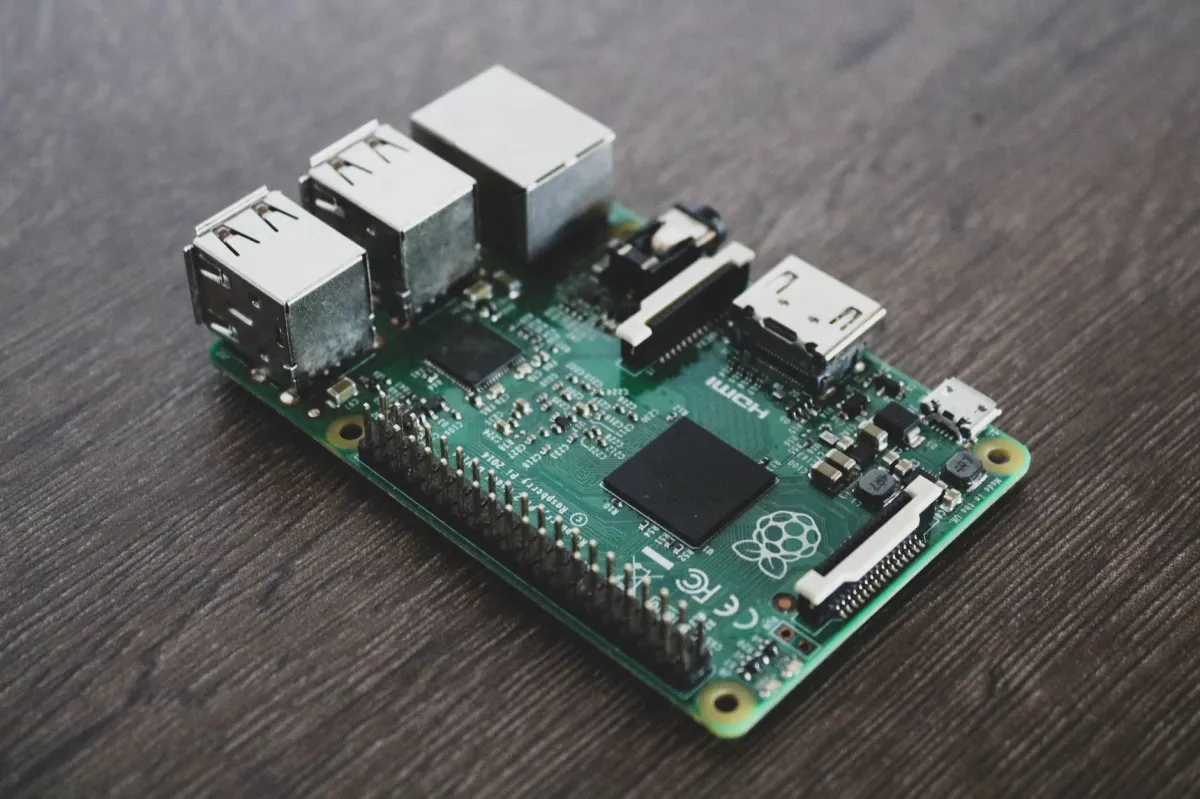
IoT nodes are built around three pillars: sensing, processing, and communication. Sensors convert physical phenomena into voltage or current, the processor digitizes the information, runs logic (often in the form of TinyML or rule engines), and transmits the result over a wireless link.
The Role of Digital Processing
Modern 2026 SoCs such as the ESP32‑P4 or the nRF54L15 feature dual‑core RISC‑V or ARM Cortex‑M33 CPUs, hardware cryptographic engines, and even neural‑network accelerators. This enables on‑device voice activation, image classification, and predictive maintenance without sending raw data to the cloud.
Modern IoT Architecture in 2026
A typical stack looks like this:
- Hardware layer: SoC + power‑management IC + antennas.
- Firmware layer: ESP‑IDF/Zephyr, Matter SDK, OTA service.
- Edge services: Local Matter controller or Home Assistant instance.
- Cloud layer: Vendor‑agnostic dashboards, AI analytics, device‑shadow storage.
What is an Analog Circuit? The Foundation of Electronics
Core Concepts of Analog Signal Processing
Analog circuits manipulate continuous voltages and currents. Operations such as amplification, filtering, mixing, and level shifting happen in real time, limited only by the bandwidth of the components.
Continuous vs Discrete Signals
Continuous signals vary smoothly over time; discrete (digital) signals are sampled at fixed intervals. Analog designs avoid quantization error, making them ideal where every microvolt matters (e.g., biomedical front‑ends).
Common Analog Components (Resistors, Capacitors, Op‑Amps)
- Resistors: Set bias points, create voltage dividers.
- Capacitors: Store energy, define filter corners.
- Operational Amplifiers: Provide gain, buffering, and active filtering with sub‑nanosecond slew rates in modern rail‑to‑rail devices.
Head-to-Head Feature Comparison
Hardware Specs & Microcontroller Integration
IoT platforms embed a full microcontroller, flash memory, and often a crypto‑accelerator. Analog circuits lack any CPU; they rely on external digital blocks if control logic is needed.
Wireless Protocols & Connectivity (WiFi, Zigbee, Z‑Wave, Thread, Matter)
2026 IoT SoCs support concurrent Wi‑Fi 7 (up to 9 Gbps raw PHY), Thread 1.4 with Matter 1.4, Zigbee 3.0, BLE 5.4, and even Z‑Wave 700‑series via dedicated radio blocks. Analog designs must add a separate RF module and perform RF layout—adding cost and complexity.
Power Consumption & Battery Longevity
IoT deep‑sleep modes now sit below 5 µW, but active radio transmission quickly climbs to 80‑500 mW. Analog front‑ends can stay under 1 mW continuously, enabling decade‑long operation on a single coin cell in low‑data‑rate applications.
Sensor Integration & Signal Setup
IoT boards expose 12‑16‑bit SAR or delta‑sigma ADCs, DACs, and a full suite of digital interfaces (I²C, SPI, UART, CAN, USB). They also provide software drivers for MEMS, environmental, and vision sensors. Analog circuits connect directly to raw transducers (thermistors, photodiodes, strain gauges) without any conversion loss.
Ecosystem & App Support
Developers can use Arduino, PlatformIO, ESP‑IDF, Zephyr, or the Matter SDK. OTA updates, secure boot, and fleet management are built‑in. For analog designs the “app” is the physical hardware; updates require a hardware revision or manual component swap.
Head‑to‑Head Feature Matrix
| Feature | IoT | Analog cuircut | Winner |
|---|---|---|---|
| Connectivity Protocols (WiFi/Zigbee/Thread) | Native multi‑protocol support in 2026: Wi‑Fi 7, Thread/Matter 1.4, Zigbee 3.0, BLE 5.4 | No native wireless capability; external radio required | IoT |
| Power Consumption & Battery | Active: 80‑500 mW (Wi‑Fi TX), 20‑80 mW (Thread/Zigbee). Deep‑sleep <5 µW. | Passive <1 mW; µA‑range for simple stages. | Analog circuit |
| Microcontroller/Processing Power | Dual‑core RISC‑V/ARM Cortex‑M33 up to 500 MHz, AI/NPU acceleration. | None – continuous‑time analog only. | IoT |
| Sensor/Pin Compatibility | 12‑16‑bit ADCs, I²C, SPI, UART, CAN, USB, 30+ GPIO. | Direct high‑fidelity analog interfacing, no quantization. | IoT |
| Setup & Software Ecosystem | ESP‑IDF 5.x, Zephyr 3.7, Matter SDK, OTA, Home Assistant. | Designed in SPICE, fabricated on PCB, no firmware. | IoT |
| Price (single node BOM) | $15‑60 (wireless SoC + sensors + PMIC). | $2‑15 (op‑amp + passives + discrete driver). | Analog circuit |
| Smart Home Integration (Domain‑Specific) | Matter/Thread, Alexa, Google Home, Apple Home, cloud dashboards. | Zero networking; works as a hard‑wired front‑end. | IoT |
| Reliability, Security & Longevity | Depends on firmware updates, vendor cloud health; 5‑8 yr lifecycle. | Decades‑long life, no software CVEs, trivially repairable. | Analog circuit |
Pros & Cons Breakdown
IoT: Advantages and Disadvantages
- Broad ecosystem and community support.
- Easy OTA updates and remote diagnostics.
- Native integration with Matter, Alexa, Google Home.
- High processing capability for AI/ML at the edge.
- Requires RF design expertise and certification.
- Higher BOM cost for wireless radios.
- Security maintenance is an ongoing responsibility.
Analog Circuit: Advantages and Disadvantages
- Ultra‑low power and long battery life.
- Deterministic sub‑microsecond response.
- Minimal component cost for simple functions.
- Robust against software bugs and cloud outages.
- No built‑in networking; adding connectivity is a separate project.
- Limited to signal conditioning and simple control.
- Lacks flexibility—hardware change required for new features.
When to Choose IoT vs Analog Circuit: Use Case Scenarios
Scenario 1: High‑Precision Real‑Time Monitoring
Application: A laboratory temperature monitor that must capture sub‑millikelvin changes and log data locally.
Solution:
// Example: ESP32‑C6 reading a 24‑bit delta‑sigma ADC over SPI
spi_bus_config_t buscfg = {
 .mosi_io_num = GPIO_NUM_23,
 .miso_io_num = -1,
 .sclk_io_num = GPIO_NUM_18,
 .quadwp_io_num = -1,
 .quadhd_io_num = -1,
 .max_transfer_sz = 4096,
};
spi_bus_initialize(VSPI_HOST, &buscfg, 1);
Why IoT wins: The ADC provides digital output that can be streamed via Thread to a Matter dashboard, and OTA updates let you refine the calibration algorithm without hardware changes.
Scenario 2: Remote Management and Smart Home Automation
Application: A Wi‑Fi‑enabled smart light switch that must be controllable from Apple Home, Google Home, and a custom mobile app.
Solution:
- Use an ESP32‑P4 with built‑in Wi‑Fi 7 and Matter SDK.
- Pair via Thread border router; expose a Matter on/off cluster.
Why IoT wins: Direct Matter support eliminates the need for proprietary clouds, and the device can receive OTA firmware to add new scenes or energy‑monitoring features.
Scenario 3: Low‑Power, Simple Trigger Mechanisms
Application: A battery‑less water‑leak detector that must sound an alarm and send a single alert once per year.
Solution:
- Design a comparator‑based analog front‑end that trips a MOSFET when resistance drops.
- Harvest energy from a tiny solar cell to power a low‑power MCU only for the brief radio burst.
Why analog dominates: The comparator runs on <5 µA, extending the battery life beyond 10 years. Adding a full Wi‑Fi SoC would drain the harvested energy too quickly.
Scenario 4: Industrial Scaling and Big Data Analytics
Application: A factory floor with 1,000 vibration sensors feeding a predictive‑maintenance AI.
Solution:
- Each node uses an nRF54L15 Thread radio with on‑device DSP to compute RMS and spectral peaks.
- Data streams to a local Matter border router, then to a cloud AI service.
Why IoT wins: Edge processing reduces bandwidth, OTA updates keep the algorithm current, and Thread’s mesh topology ensures reliable coverage across the plant.
Final Verdict: Which is Right for Your 2026 Project?
The Hybrid Approach: Combining Analog and IoT
Most modern products blend the strengths of both worlds. A typical smart thermostat uses an analog front‑end for temperature sensing (thermistor + op‑amp), a low‑power MCU for scheduling, and a Thread radio for Matter connectivity. The analog path guarantees accurate measurement even if the network fails, while the IoT layer adds remote control and analytics.
Summary Checklist for Decision Making
| Decision Factor | Choose IoT | Choose Analog |
|---|---|---|
| Need for remote monitoring or cloud analytics? | ✅ | ❌ |
| Battery life >10 years on a coin cell? | ❌ | ✅ |
| Regulatory certification (Wi‑Fi/Thread) already budgeted? | ✅ | ❌ |
| Requirement for sub‑microsecond control loops? | ❌ | ✅ |
| Desire for OTA updates and secure boot? | ✅ | ❌ |
| Cost sensitivity for high‑volume commodity part? | ❌ (if connectivity not needed) | ✅ |
Verdict: There is no universal winner. IoT excels when you need connectivity, intelligence, and ecosystem integration. Analog circuits win when power, latency, or ultra‑low cost are paramount. In 2026 the most successful designs combine a minimal analog front‑end with a capable IoT SoC, delivering the best of both worlds.