
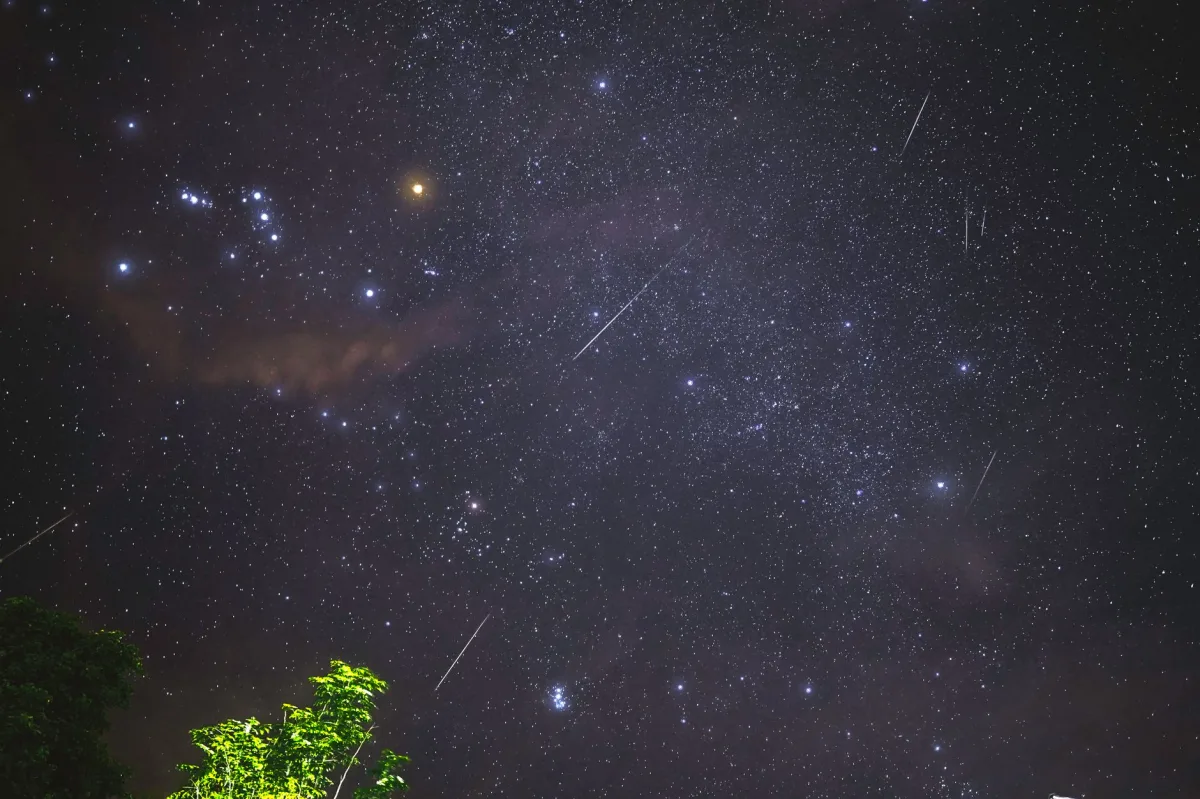
A meteorite is a solid fragment of extraterrestrial material that survives its fiery passage through Earth’s atmosphere and lands on the ground. Unlike meteoroids, which orbit the Sun, and meteors, which are the luminous streaks seen in the sky, meteorites represent the tangible remnants of asteroids, comets, the Moon, or Mars that we can hold in our hands.
Quick Definition and Key Differences
Definition: A meteorite is a natural solid object from space that survives atmospheric entry and impacts Earth’s surface.
The three related terms are often confused:
- Meteoroid: The object while it is still traveling in space.
- Meteor: The bright streak produced when a meteoroid burns up in the atmosphere.
- Meteorite: The fragment that reaches the ground.
Recent Research and Trends (2024‑2026)
NASA’s OSIRIS‑REx mission returned samples from asteroid Bennu in 2023. Comparative analyses of those samples with freshly recovered carbonaceous chondrites have confirmed that primitive asteroids retain complex organic molecules, including amino acids and nucleobases NASA, 2024. In the past two years, laboratory studies have refined the temperature thresholds at which these organics degrade, emphasizing the importance of rapid recovery Science Advances, 2025.
Funding for planetary‑science research continues to expand, with agencies such as the National Science Foundation and NASA supporting projects that map strewn fields, develop isotopic dating techniques, and investigate aqueous alteration in meteorites NSF Annual Report, 2025. Public interest has also risen: fireball‑tracking platforms now receive thousands of citizen‑submitted videos each year, providing a richer dataset for researchers American Meteor Society, 2026.
Meteorite Life Cycle
Atmospheric Entry
When a meteoroid enters Earth’s atmosphere at 11–72 km s⁻¹, the surrounding air compresses and heats to temperatures above 2 000 °C. The outer layers vaporize, creating a plasma trail that we observe as a meteor.
Survival and Fragmentation
Only bodies with sufficient mass and a robust composition develop a protective fusion crust. As the object decelerates, it may break apart, scattering fragments across a strewn field that can cover several square kilometers.
Impact and Groundfall
Remaining fragments reach terminal velocity—approximately 200 m s⁻¹ for a 10 kg piece—before striking the surface. The impact creates a shallow crater and rapidly cools the stone, preserving delicate minerals and any trapped organics.
Classification of Meteorites
Scientists sort meteorites into three broad groups based on composition and structure:
| Class | Typical Composition | Key Features |
|---|---|---|
| Stony (chondrites & achondrites) | Silicate minerals, occasional metal | Chondrules, high porosity; most common (~94 %) |
| Iron | Nickel‑iron alloy | Widmanstätten pattern, high density |
| Stony‑Iron (pallasites & mesosiderites) | Mix of silicate crystals in metal matrix | Visually striking, intermediate density |
Within the stony category, carbonaceous chondrites (e.g., CI, CM, CO) are especially valuable because they contain hydrated minerals and primitive organics that have undergone minimal alteration since the Solar System formed.
Scientific Insights from Meteorites
Organic Compounds and Prebiotic Chemistry
Carbonaceous chondrites host a suite of organic molecules, including amino acids, nucleobases, and simple hydrocarbons. These compounds provide direct evidence that the building blocks of life were present on early asteroids Nature, 2023. Because many organics are sensitive to moisture, fresh falls are for preserving their original composition.
Water and Mineralogy
Hydrated minerals such as serpentine and phyllosilicates indicate that water once pervaded the parent bodies of many meteorites. The presence of these minerals supports models in which water was delivered to the early Earth via asteroid impacts Geochimica et Cosmochimica Acta, 2024.
Isotopic Dating and Solar System Chronology
Lead‑lead and uranium‑lead isotopic systems consistently date carbonaceous chondrites at about 4.55 billion years, making them time capsules of the protoplanetary disk. By comparing isotopic ratios in meteorites with those in returned samples, researchers refine thermal‑evolution models of asteroids Science, 2025.
Field Identification Guide
Visual Clues
First‑hand inspection can reveal three hallmark features:
- A thin, black fusion crust that forms during atmospheric heating.
- Regmaglypts—shallow, thumbprint‑like depressions on the surface.
- A metallic sheen on iron‑rich specimens, often visible under bright light.
Magnetic Test and Density Check
Use a strong neodymium magnet: iron meteorites will cling firmly, while most stony types show only a weak attraction. To assess density, compare the stone’s weight to its volume; meteorites are typically denser than common terrestrial rocks of similar size.
Tools and Mobile Apps
Modern fieldwork benefits from smartphone applications such as Fireball Tracker, which overlay reported trajectories on a GPS map. A portable hand lens, a small balance, and nitrile gloves complete a basic identification kit.
Safe Collection and Preservation
Rapid Retrieval Protocol
Time is critical because exposure to humidity can alter sensitive minerals within hours. Follow these steps immediately after locating a fragment:
- Don nitrile gloves to avoid contaminating the stone with skin oils.
- Wrap the meteorite in two layers of clean aluminum foil.
- Place the wrapped sample in a sterilized glass jar with a tight‑fitting lid.
Moisture Control
Store the sealed container in a cool, dry environment. Desiccators or nitrogen‑purged cabinets are ideal; avoid plastic bags, which trap moisture and accelerate alteration.
Documentation
Record GPS coordinates, orientation, and surrounding soil characteristics before moving the sample. Photographs taken from multiple angles provide valuable context for later laboratory analysis.
Common Mistakes and Troubleshooting
Delayed Recovery
Waiting more than 24 hours can allow moisture‑sensitive minerals to degrade, erasing key scientific signals. Prompt collection preserves the original chemistry and maximizes research value.
Mislabeling and Contamination
Always label the sample with a unique identifier and note the exact location of discovery. Mixing meteorites with ordinary rocks leads to wasted laboratory time and potential misinterpretation of data.
Legal and Reporting Considerations
In the United States, meteorites found on private property belong to the landowner, while those on federal land require a permit from the appropriate agency. Regardless of jurisdiction, notifying a nearby university or the American Meteor Society helps ensure proper scientific documentation.
Who Benefits? Target Audiences and Practical Uses
Hobbyist Collectors
Collectors gain prestige and resale value from specimens with documented falls and clear provenance.
Academic Researchers
Scientists rely on fresh falls for isotopic dating, organic analysis, and parent‑body identification.
Educators and Science Communicators
Hands‑on meteorite displays spark curiosity and illustrate planetary‑formation concepts for students of all ages.
Museum Curators and Exhibitors
Provenance documentation enhances exhibition credibility and can support grant funding for public outreach.
| Target Persona | Recommended Option | Key Reason & Real‑World Benefit |
|---|---|---|
| Hobbyist Collector | Certified fall from a documented fireball | Higher scientific provenance increases resale value and collector prestige. |
| Academic Researcher | Fresh carbonaceous chondrite (CM or CI) | Preserves fragile organics and hydrated minerals for laboratory analysis. |
| Educator | Sturdy iron meteorite with visible Widmanstätten pattern | Durable, visually striking, and safe for classroom handling. |
| Museum Curator | Documented lunar or Martian meteorite | Unique provenance attracts visitors and supports grant funding. |