
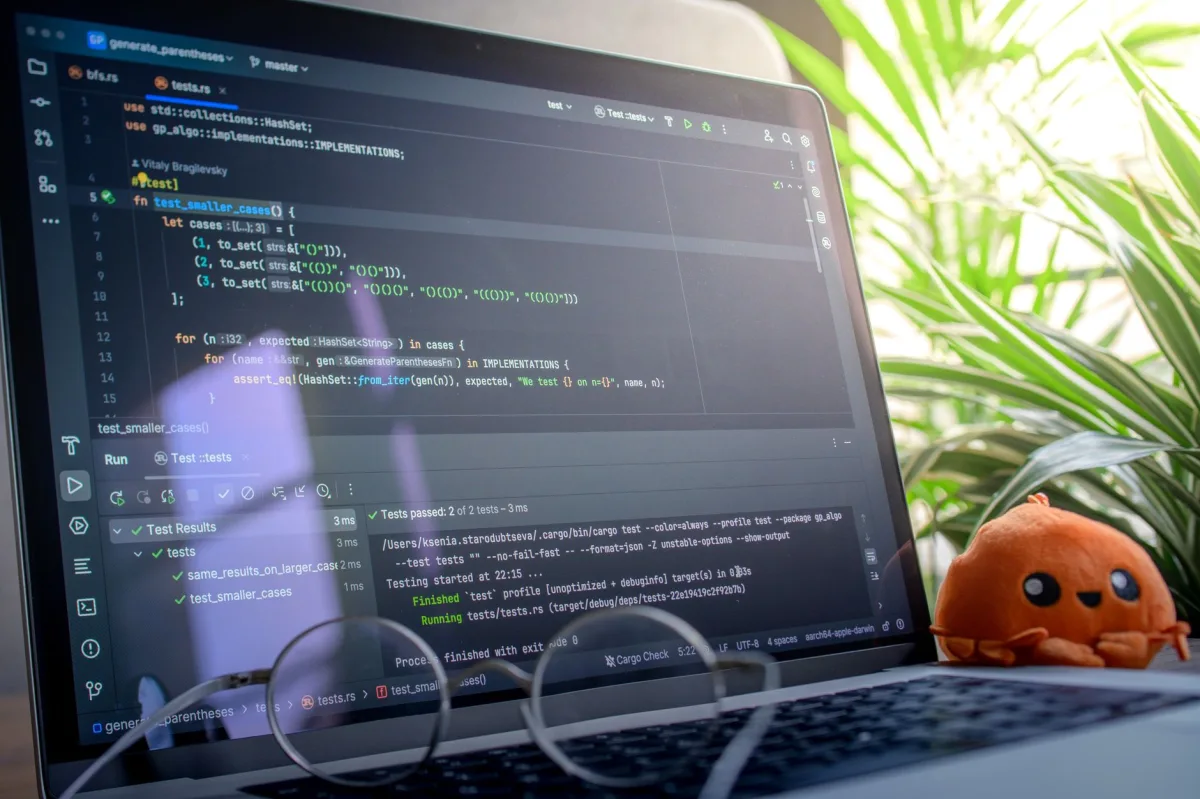
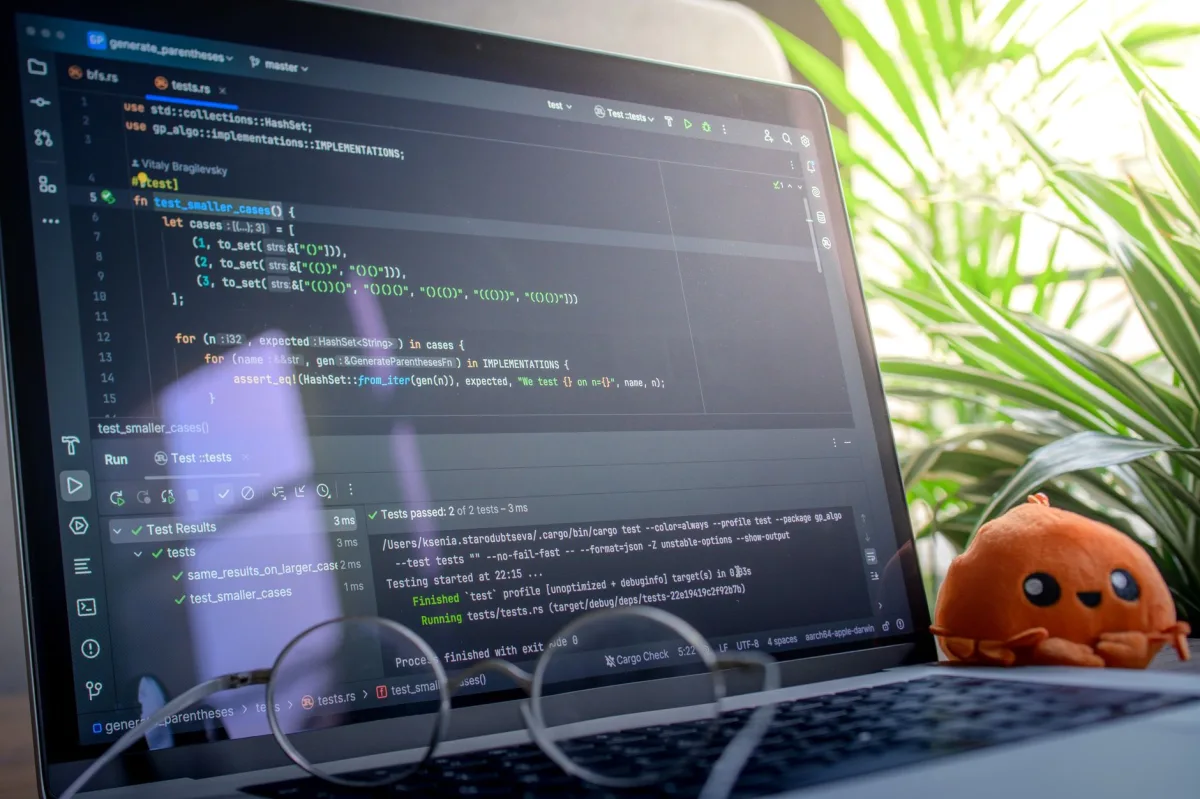
Laravel Testing in 2026 is less about chasing 100% line coverage and more about proving that the business rules your customers rely on actually hold up under real conditions. The framework ships with everything a serious team needs: PHPUnit, the expressive Pest DSL, built-in HTTP helpers, database transactions, and a faking system that removes the temptation to hit third-party APIs. Add a handful of well-chosen 2025-2026 era tools and the workflow becomes fast, deterministic, and surprisingly cheap to run on every commit.
This guide is opinionated. It maps Laravel Testing to the realities shipping teams face now: AI agents chewing through context windows, multi-tenant routing on subdomains, MongoDB-backed race conditions, and the constant pressure to keep test suites under a minute. Use it as a working reference, not a textbook.
Overview: What is Laravel Testing?
Definition & Scope
Definition: Laravel Testing is the ecosystem of PHPUnit, Pest, and Laravel's first-party test helpers that lets you simulate HTTP requests, exercise the Eloquent ORM, queue jobs, fire events, and assert on the full request/response lifecycle without manually running the app.
The scope covers three layers. Unit tests isolate a single class or method. Feature tests drive the framework through the router, middleware, container, and database to confirm an end-to-end user behavior. Integration tests sit in between, exercising real services like Redis or a remote queue while still faking slow or paid APIs.
Why Business Behavior Matters
A green test suite that proves $user->save() returns true is not the same as a green suite that proves a customer can refund an order only once. Laravel Testing shines when its assertions track real workflows: a guest can browse, an authenticated user can checkout, a refund cannot double-pay. Every recommendation in this article tilts toward that second kind of test.
Why Laravel Testing Matters in 2026
Modern PHP Ecosystem Trends
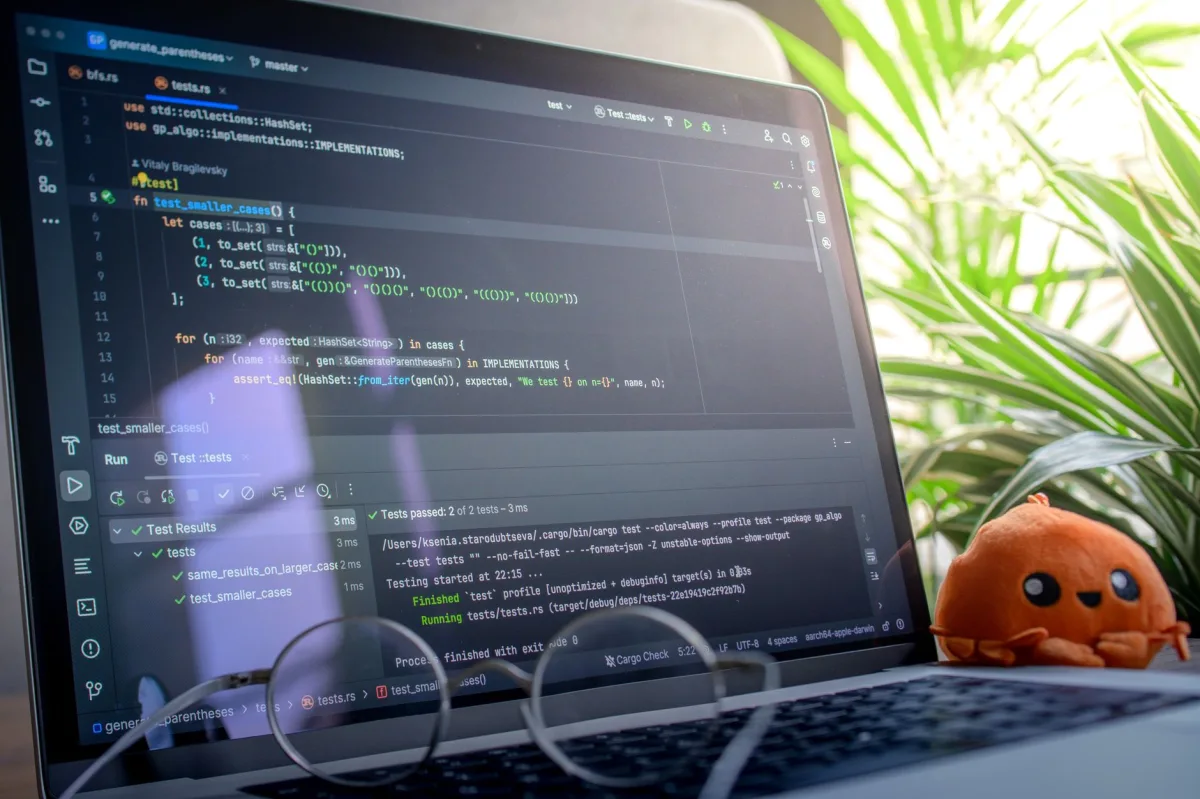
PHP 8.4 and the early 8.5 release cadence have made static analysis and typed properties table stakes. Laravel 11 and 12 trimmed the framework's surface area, which means tests have fewer moving parts to mock. At the same time, the rise of AI coding agents (Claude Code, Cursor, Devin, Gemini CLI) has changed what test output looks like: an exploding PHPUnit stream now burns through an agent's context window in seconds, which is exactly why tools like PAO (Agent-Optimized Output) exist.
Performance & Deployment Demands
Continuous deployment is the norm. A pull request that takes 20 minutes to validate cannot ship the way a 90-second suite can. The performance bar for Laravel Testing in 2026 is sub-minute locally, under five minutes in CI, and zero external network calls. Anything slower is a tax the team will quietly start to skip.
Prerequisites & Tooling Setup
Laravel Version & PHP Requirements
Most modern Laravel Testing libraries, including Double, Nimbus, and PAO, require PHP 8.3 or higher. Run Laravel 11 or 12 on PHP 8.3+ to stay inside the supported matrix. Anything older and you will hit hard version walls on the Composer dependency tree.
PHPUnit, Pest, and Laravel Sail
PHPUnit ships with every new Laravel install. To add Pest, run composer require pestphp/pest --dev --with-all-dependencies and then php artisan pest:install. For Docker-isolated runs, Laravel Sail gives you a reproducible Linux environment that matches production, which is the single biggest defense against the "works on my Mac" class of Laravel Testing bugs.
Composer & Artisan Commands
Use Composer to install libraries, Artisan to scaffold tests, and never check vendor directories into Git. The two artisan commands worth memorizing are php artisan make:test CheckoutFlowTest for feature tests and php artisan make:test PricingRuleTest --unit for pure logic. Pair them with composer dump-autoload after pulling new test traits.
Core Testing Patterns in Laravel
Unit Tests with Mockery & Double
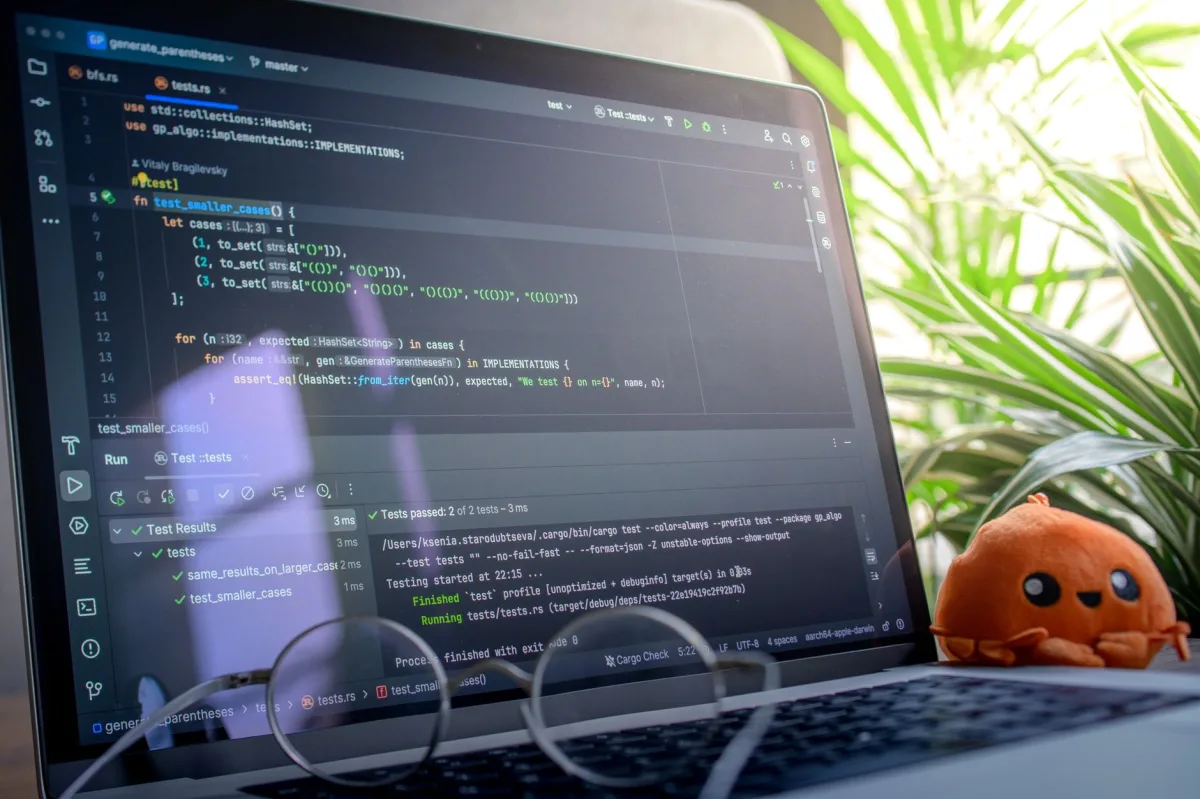
For pure logic, keep the surface area tiny. A 2026 update worth knowing: Double consolidates the messy bits of Mockery into a single constructor, three modes (loose, strict, passthru), and two setup verbs (expects, allows). The typical flow is:
- Create a double with
Double::for(Class::class). - Configure expectations using
expects()orallows(). - Invoke the code under test.
- Verify interactions with
received(). - Optionally include the
VerifiesDoublestrait so PHPUnit fails the test if any expectation was not met.
Compared with raw Mockery, the failure messages now include a call log, so you stop guessing which argument was wrong.
Feature Tests & HTTP Assertions
Feature tests are the heart of Laravel Testing. They boot the framework, hit routes, and let you assert on response status, JSON shape, session, and database side effects. A checkout flow test reads almost like a user story:
test('user can place an order once', function () {
 $user = User::factory()->create();
 $product = Product::factory()->create(['stock' => 5]);

 $this->actingAs($user)
 ->post(route('orders.store'), [
 'product_id' => $product->id,
 'quantity' => 1,
 ])
 ->assertCreated()
 ->assertDatabaseCount('orders', 1)
 ->assertDatabaseHas('products', ['id' => $product->id, 'stock' => 4]);
});
That single test exercises routing, auth middleware, validation, the controller, Eloquent writes, and the event system. The return on investment dwarfs any unit test you would have written for the controller method itself.
Database Refresh & Seeding
Use the RefreshDatabase trait on every test class that touches the database. It runs migrations once per test run and wraps each test in a transaction that gets rolled back. For tests that intentionally exercise transactions, switch to DatabaseMigrations or use RefreshDatabase with a withoutEvents setup. Seeders belong in beforeEach only when the test cannot manufacture its own state.
Integration vs. Unit: Finding the Balance
When to Mock vs. Real Services
Mock external services you do not own: payment gateways, OpenAI, SendGrid, geocoders. Keep real the services you do own: your database, your queue worker, your cache. The rule of thumb is simple: if a failure in the dependency can break your production code path, the test must hit the real thing at least once in your suite.
Mocking External APIs with Laravel's Fake
Laravel's faking system covers mail, notifications, queues, events, and HTTP via Http::fake(). For AI agents specifically, the Ship AI with Laravel pattern uses preventStrayPrompts to catch accidental calls in flows that should not trigger the agent, and Queue::fake() to assert that a classifier like TicketClassifier was queued on valid input and absent on invalid input. The result: zero external API calls, deterministic responses, no flakiness, and tests cheap enough to run on every commit.
Real‑world Integration Scenarios
For multi-tenant apps, run the same feature test against three different tenant IDs to prove isolation. For MongoDB-backed apps, write a feature test that spawns parallel requests to the same document and assert the final state is consistent, since this is the fastest way to surface a race condition before it ships.
Advanced Testing Techniques
Pest Browser Plugin & End‑to‑End
Pest's browser plugin runs real headless Chrome against your application. In 2026 it adds withHost() for subdomain testing, which means you can finally test multi-tenant or workspace apps with sane URLs. Update with composer update pestphp/pest-plugin-browser and set the host per test or globally in Pest.php. The global setting is ideal for Laravel Sail environments where the host is fixed but the subdomain rotates per tenant.
Parallel Testing with Paratest
Paratest forks PHP processes and runs independent test classes in parallel. It pairs naturally with Pest 4/5 and PHPUnit 12/13. The performance jump on a 600-test suite is usually 3x to 5x, which is the difference between a CI step developers ignore and one they actually trust.
Using OpenAPI & Swagger for Contract Tests
Tools like Nimbus (not to be confused with Swagger or Scribe, which generate customer-facing docs) build an in-browser API playground by discovering routes and validation rules from FormRequest classes, Spatie Data objects, inline rules, or an OpenAPI spec. Install with composer require sunchayn/nimbusphp, publish with artisan vendor:publish --tag=nimbus-assets --tag=nimbus-config, then visit /nimbus to drive endpoints interactively. Its value to testing is the contract layer: you can paste a payload, see the validation response in real time, and lock those cases into your suite.
Common Pitfalls & Troubleshooting
Over‑Mocking and Hidden Bugs
The classic sin: mock the database, mock the queue, mock the cache, and you have tested nothing except your own assumptions. Reserve mocks for the boundaries of the system (external APIs, AI providers) and let the framework's own services run for real.
Database State Issues
Flaky tests usually point at leaked state. The fix is discipline: RefreshDatabase on every test class, no shared static properties, no global model events left registered. If you must share data, use a model factory with states and call it inside the test, not at class level.
Test Performance Bottlenecks
When the suite creeps past five minutes, profile it. The usual suspects are seeders, mail fakes without preventStrayPrompts, image generation in factories, and external HTTP calls that snuck past a fake. Switch to array cache and array session drivers, run migrations once per process, and turn on Paratest.
Best Practices & Recommendations
Keep Tests Fast & Isolated
Every test should boot, run, and tear down in under 200ms. If it does not, either split it, mock the slow part, or move it to an integration tier. Slow tests train teams to skip them.
Use Laravel's Built‑in Features
PHPUnit, Pest, RefreshDatabase, actingAs, Http::fake, Mail::fake, Queue::fake, and the VerifiesDoubles trait cover roughly 90% of real test needs. Add Double, Nimbus, and PAO only when you have a concrete gap.
Maintain Business‑Focused Assertions
Assert on user-visible outcomes: response codes, database rows, queued jobs, sent mail. Avoid asserting on private methods, internal arrays, or implementation details. Tests that read like a sentence in plain English are tests that survive refactors.
Who Should Use Which Approach?
Table of Personas & Recommended Config
| Target Persona | Recommended Option | Key Reason & Real-World Benefit |
|---|---|---|
| Solo developer shipping a SaaS MVP | Pest + RefreshDatabase + Http::fake | Expressive DSL keeps test files short; fakes remove API costs during rapid iteration. |
| Startup team on a multi-tenant app | Pest + Pest Browser Plugin (withHost) + Paratest | Subdomain tests run reliably, parallel execution keeps CI under two minutes. |
| Enterprise team shipping AI features | PHPUnit or Pest + Double + preventStrayPrompts + PAO | Strict doubles catch wrong AI calls; PAO keeps AI-agent context windows usable. |
| Agency maintaining legacy Laravel 9/10 code | PHPUnit + Mockery + RefreshDatabase | Lowest migration cost, no PHP 8.3 requirement, ships with the framework already. |
| Open-source package maintainer | PHPUnit + Orchestra Testbench + GitHub Actions matrix | Proves the package works against multiple Laravel and PHP versions without app overhead. |
Verdict: For most 2026 teams, Pest plus Laravel Sail plus Paratest is the default Laravel Testing stack. Add Double when Mockery gets unwieldy, add Nimbus when you need a shared API playground, and add PAO the day an AI agent becomes a regular contributor to your repo.