
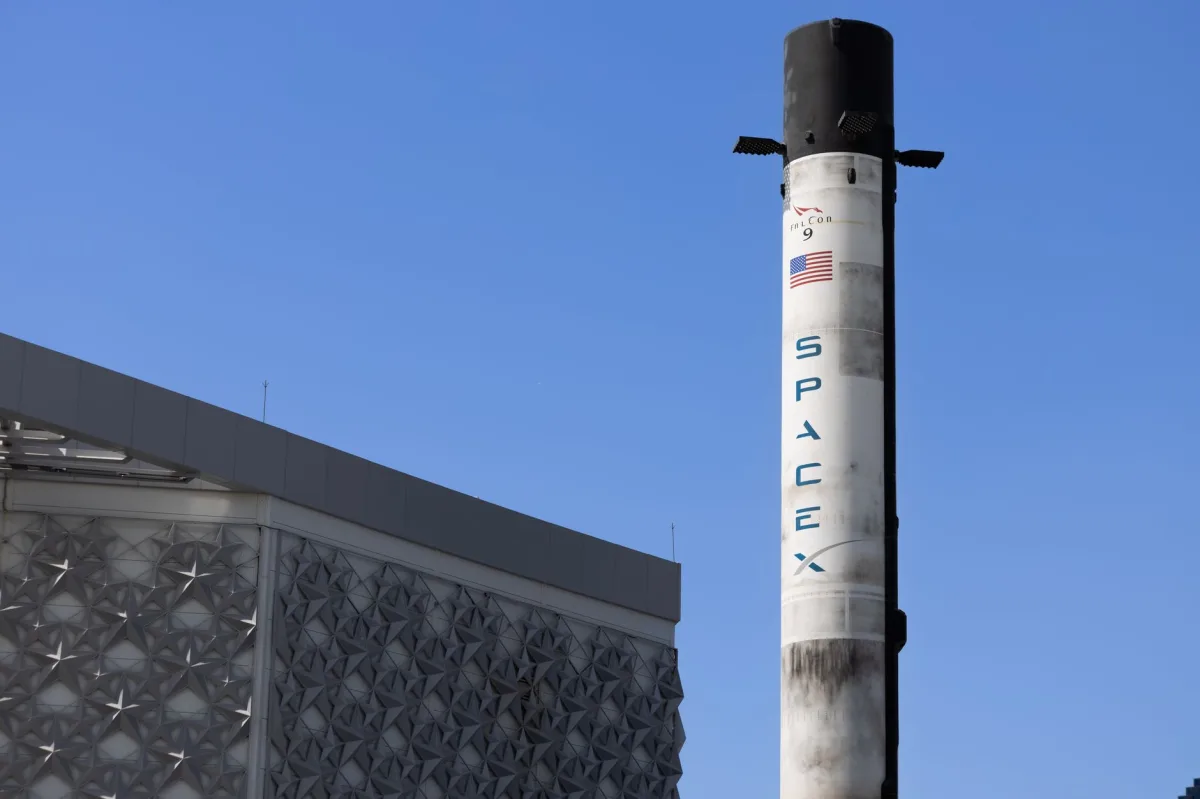
The phrase spacex rocket crash moon australia resurfaced in early 2026 after scientists revisited a 2022 lunar impact that many initially linked to a Falcon 9 stage. In reality, NASA confirmed in June 2022 that the impact was caused by a Chinese Long March 3C upper stage from the 2014 Chang’e 5‑T1 mission. This correction reshapes the story, highlights the importance of accurate tracking, and shows why Australian observatories have become essential partners in cislunar surveillance.
What was the “spacex rocket crash moon australia” event?
Corrected event summary
On 4 March 2022, at 12:25 UTC, a Chinese Long March 3C upper stage struck the Moon’s far side near the Hertzsprung crater. The stage, launched in 2014, had exhausted its propellant and entered a chaotic Earth‑Sun orbit that intersected the Moon’s sphere of influence after seven years of drifting. NASA’s Lunar Reconnaissance Orbiter (LRO) later verified the fresh crater, and a June 2022 press release identified the object as the Chang’e 5‑T1 upper stage—not a SpaceX vehicle.[1]
Timeline of the actual upper‑stage journey
- Oct 2014 – Launch of Chang’e 5‑T1 on a Long March 3C rocket.
- Oct 2014 – Upper stage separates, runs out of fuel, and begins uncontrolled drift.
- 2015‑2021 – The stage follows a heliocentric trajectory with occasional Earth and lunar fly‑bys.
- Jan 2022 – Amateur tracker Bill Gray predicts a possible lunar impact, later retracting his claim after NASA’s clarification.
- Mar 2022 – Impact confirmed by LRO imaging and optical flash detections.
Why the “crash” label persists
Media outlets used “crash” because the event produced a visible impact flash and a new crater. The term, however, suggests negligence. In fact, the stage followed deterministic orbital mechanics; without fuel it could not execute a de‑orbit burn, making the lunar collision an inevitable outcome of its long‑term trajectory.
Why the SpaceX rocket crash moon Australia story still matters in 2026
Growing cislunar traffic
From 2020 to 2025, more than 30 missions—governmental and commercial—entered cislunar space. NASA’s Artemis program, China’s lunar gateway, and a wave of private landers now share a region that lacks the robust disposal rules that govern low‑Earth orbit. Each new object adds to a congested environment where uncontrolled debris can linger for decades.
Regulatory gaps
The 1967 Outer Space Treaty obliges signatories to avoid harmful contamination, but it does not prescribe end‑of‑life disposal beyond geostationary orbit. In 2024 the UN Committee on the Peaceful Uses of Outer Space (COPUOS) drafted a “Cislunar Debris Mitigation” guideline, which remains under review[2]. Until such standards are adopted, individual agencies rely on internal policies that vary widely.
Implications for upcoming missions
Future crewed flights will operate in near‑rectilinear halo orbits (NRHO) around the Moon. An uncontrolled impact like the Long March 3C stage demonstrates the need for active tracking, pre‑planned disposal pathways, and clear liability frameworks to protect scientific sites and astronaut safety.
Key concepts in orbital mechanics
Orbit types and decay processes
Objects can reside in low‑Earth orbit (LEO), geostationary orbit (GEO), or heliocentric trajectories. Decay occurs when atmospheric drag, solar radiation pressure, or gravitational perturbations lower an object’s perigee. In the case of the Long March 3C stage, solar radiation pressure and repeated lunar encounters gradually altered its eccentricity until lunar capture became possible.
Passivation and residual energy
When an upper stage runs out of propellant, operators typically vent remaining pressurants—a process called passivation. Although the stage can no longer thrust, it retains kinetic energy that defines its orbit. Without active maneuvering, that energy can carry the object across planetary spheres of influence for years.
Lunar capture mechanics
Capture occurs when an object’s velocity relative to the Moon falls below the lunar escape velocity (~2.38 km/s). The Long March 3C stage intersected the Moon’s sphere of influence at a shallow angle, allowing gravity to pull it into a sub‑orbital path that ended in impact.
From Earth orbit to lunar impact
Initial trajectory after launch
After separation, the Long March 3C stage was placed on a trans‑lunar injection (TLI) trajectory intended for a heliocentric graveyard orbit. Insufficient delta‑V left the stage on a highly elliptical Earth‑Sun orbit with a period of roughly 1.2 years.
Seven years of chaotic wandering
During its seven‑year drift, the stage experienced:
- Solar radiation pressure variations linked to the solar cycle.
- Gravitational assists from Earth and the Moon during close approaches.
- Long‑term perturbations that slowly shifted its orbital plane.
Final lunar encounter
Each lunar fly‑by reduced the relative velocity by a few hundred meters per second. By the last encounter, the residual speed was low enough for the Moon’s gravity to dominate, pulling the stage into a collision course that culminated in a 20‑meter‑wide crater on the far side.
What happens when a rocket hits the Moon?
Impact energy and crater size
The 4‑tonne upper stage struck at roughly 9.3 km/s, delivering kinetic energy on the order of 1.7 × 10¹¹ J. That energy excavated a bowl‑shaped crater about 20 m across and 4 m deep, comparable to a small conventional explosive.
Scientific opportunities from fresh craters
Fresh impacts expose subsurface material, offering a natural laboratory for lunar geology. Spectrometers aboard LRO detected a mix of mature regolith and deeper basaltic layers, providing clues about the Moon’s volcanic history that would otherwise remain hidden.
Detection of the impact flash
Ground‑based optical sensors in Australia and the European Southern Observatory recorded a brief “lunar impact flash.” The flash helped triangulate the impact location and confirmed the timing of the collision.
Why Australia is watching the Moon
Curtin University’s deep‑space tracking facility
Curtin’s Deep Space Tracking Facility in Western Australia operates a large dish (approximately 35 m in diameter)[3]. The antenna can monitor objects in cislunar space and contributed critical Doppler data that refined the impact trajectory after Bill Gray’s initial prediction.
Amateur flash‑watching networks
Australian amateur astronomers have logged lunar impact flashes since the 1990s. Their long‑standing experience made them natural partners when the 2022 event required rapid verification and public outreach.
Australia’s national space role
The Australian Space Agency was established on 1 July 2018. Since then, the agency has invested in space situational awareness (SSA) infrastructure, including the Southern Hemisphere Space Surveillance Network. This network collaborates with the U.S. Space Force and ESA to catalog deep‑space debris that northern‑hemisphere stations cannot see.
These capabilities created a seamless hand‑off from amateur observations to professional tracking, ensuring the impact was documented from flash to crater.
Policy and regulatory after the impact
International response
Following NASA’s clarification, the International Astronautical Federation (IAF) called for a unified reporting system for deep‑space impacts. Several spacefaring nations expressed interest in expanding the existing Space Object Catalog to include objects beyond GEO[4].
National guidelines in Australia
Australia’s 2023 Space Debris Mitigation Strategy now requires all new launch providers to submit end‑of‑life disposal plans for objects that will leave Earth orbit. The strategy also mandates passive passivation of residual propellants and batteries.[5]
Emerging best‑practice standards
Industry groups such as the Secure World Foundation have drafted “Cislunar Disposal Protocols.” The drafts recommend:
- Allocating a minimum propellant reserve for a controlled lunar‑orbit disposal burn.
- Registering all objects that will travel beyond GEO in a publicly accessible database.
- Coordinating observation campaigns through a global network of ground stations.
Future mitigation strategies and trade‑offs
Active debris removal (ADR) concepts
Proposals include using robotic servicers to capture and de‑orbit upper stages before they reach the Moon. While technically feasible, ADR raises cost, liability, and legal‑ownership questions that have yet to be resolved.
Design‑for‑disposal engineering
Modern launch vehicles increasingly budget extra propellant for end‑of‑life maneuvers. The trade‑off is higher launch mass versus reduced long‑term collision risk. Companies that adopt this approach can market their missions as “debris‑responsible,” which may become a competitive advantage as regulations tighten.
Passive mitigation techniques
Passivation remains the simplest method: venting residual gases, discharging batteries, and using low‑reflectivity coatings to reduce solar radiation pressure effects. However, passive measures alone cannot guarantee that an object will not eventually intersect the Moon’s orbit.
What we got wrong, and what we learned
Debunking the SpaceX myth
The initial headline “SpaceX rocket crash moon Australia” was a classic case of attribution bias. The mistake arose from a combination of a dramatic flash, a lack of immediate data, and the global prominence of SpaceX. By the time NASA issued a correction, the story had already saturated social media.
Lessons for cislunar governance
First, accurate, real‑time tracking must be a shared international responsibility. Australia’s Southern Hemisphere assets proved that without a global network, large portions of the sky remain blind. Second, the episode exposed how fragmented policy—COPUOS drafts, national strategies, and industry protocols—fails to provide a single compliance pathway. Third, the incident demonstrates that even “dead” hardware can become a scientific asset, suggesting that future regulations should allow controlled “impact experiments” under strict safety oversight.
Practical takeaways for stakeholders
- Policy analysts: Use the COPUOS 2024 draft as a baseline to propose binding international standards.[2]
- Educators: Incorporate the Long March 3C trajectory into orbital‑mechanics curricula to illustrate real‑world delta‑V budgeting.
- Amateur astronomers: Join Curtin’s live‑tracking feed to contribute flash observations that feed professional databases.
- Commercial developers: Embed passivation and end‑of‑life fuel reserves into design SOPs to pre‑empt liability claims.
- General readers: Follow NASA’s LRO post‑impact analysis for accessible insights into how “crashes” become research opportunities.
Common misconceptions about the impact
It was a SpaceX accident
Initial reports linked the crater to a Falcon 9 stage, but NASA’s analysis confirmed a Chinese Long March 3C upper stage. Bill Gray’s early claim was retracted, and the mislabel persisted due to the catchy headline.
Debris decays quickly in cislunar space
Objects beyond Earth’s atmosphere experience negligible drag. The Long March 3C stage survived seven years, illustrating that debris can remain hazardous for decades without active removal.
Impact data is useless without a mission
Even unplanned impacts generate valuable scientific data. The fresh crater allowed researchers to sample previously unexposed material, refining models of regolith maturity and basaltic composition.
Who is this article best for? Reader personas and recommendations
| Target Persona | Recommended Action | Key Reason & Real‑World Benefit |
|---|---|---|
| Space Policy Analyst | Review COPUOS draft guidelines | Provides a framework to influence upcoming international regulations on cislunar debris. |
| University Physics Instructor | Use the Long March 3C trajectory as a case study | Illustrates real‑world orbital mechanics and the importance of delta‑V budgeting. |
| Astronomy Hobbyist | Subscribe to Curtin University’s live tracking feed | Enables direct observation of deep‑space objects and impact‑flash alerts. |
| Commercial Lunar Developer | Integrate passivation protocols into design SOPs | Reduces liability and aligns with emerging industry best practices. |
| General Science Enthusiast | Read NASA’s LRO post‑impact analysis | Offers accessible insight into how a “crash” becomes a scientific opportunity. |
Final verdict: Lessons from the 2026 lunar impact
Key insights
- The Long March 3C upper stage’s journey shows how abandoned hardware can linger for years before colliding with a celestial body.
- Australian tracking assets proved essential for confirming and studying the impact.
- Regulatory gaps leave cislunar space vulnerable; draft guidelines are moving toward international consensus.
- Uncontrolled impacts can double as scientific experiments, but the risk to heritage sites and future landers grows.
Future outlook
As more nations and private firms target the Moon, the space community will need robust disposal standards, shared tracking infrastructure, and clear liability rules. The spacex rocket crash moon australia story—though misnamed—serves both as a warning and an opportunity: every kilogram left in space follows a future trajectory, and careful planning can turn an unintended collision into valuable data.
- NASA press release, 22 June 2022, confirming the Chang’e 5‑T1 upper stage as the impactor.
- UN COPUOS “Cislunar Debris Mitigation” draft, 2024 (still under review).
- Curtin University Deep Space Tracking Facility specifications, 2023, 35 m dish diameter.
- International Astronautical Federation (IAF) statement, 15 July 2022, on unified deep‑space reporting.
- Australian Space Agency, “Space Debris Mitigation Strategy”, 2023.