Home›Buying Guides›Intel Core i7 vs Ryzen 7: Which CPU Wins in 2026?
Intel Core i7 vs Ryzen 7: Which CPU Wins in 2026?
By Brieflyn Editorial Team •
Published: July 27, 2026 •
11 min read (2,189 words) • 6 views
Compare Intel Core i7 vs Ryzen 7 in 2026. Detailed analysis of benchmarks, gaming performance, power efficiency, and price to help you choose the best CPU.
Executive Summary: Intel Core i7 vs Ryzen 7 at a Glance
Quick Comparison Table
Feature
Intel Core i7 (2026)
Ryzen 7 (2026)
Winner
Process Node
20A/18A (Foveros 3D)
TSMC N2/N3P (GAAFET)
Ryzen 7
Core / Thread Count
8 P‑cores + 16 E‑cores (24 cores, 32 threads)
8 cores / 16 threads (monolithic CCD)
Intel Core i7
Boost Clock
5.8‑6.0 GHz (P‑cores)
5.7‑5.9 GHz (standard), 5.6 GHz (X3D)
Intel Core i7
TDP (Base / Turbo)
125 W / 250 W
105 W / 130 W
Ryzen 7
Gaming Performance
Strong single‑core, 10‑15 % lead in esports titles
5‑15 % lead in cache‑bound games (X3D)
Ryzen 7
Power Efficiency
Improved, but ~30‑40 % higher draw under full load
Industry‑leading, 30‑50 % better perf/watt
Ryzen 7
Platform Cost
High‑end motherboards $200‑250+
AM5 boards $130‑300
Ryzen 7
The 2026 Market
In 2026 the high‑end desktop segment is split between Intel’s 13th‑generation hybrid i7 family and AMD’s Zen 6‑based Ryzen 7 line. Both camps ship DDR5‑8000‑compatible silicon, PCIe 5.0 lanes, and native Wi‑Fi 7. Pricing pressure from AMD’s aggressive refreshes and Intel’s occasional bundle deals keeps the two options within a $50‑$100 window for most consumers. The decision now hinges on how each architecture handles real‑world workloads, thermals, and long‑term platform stability.
What is Intel Core i7? The Intel Core i7 family in 2026 represents the flagship of Intel’s hybrid strategy. It combines high‑performance (P) cores with efficient (E) cores on a single die, leverages the Thread Director scheduler, and integrates Iris Xe graphics with QuickSync video acceleration. Built on the 20A/18A process, the i7 targets power‑hungry gamers, creators, and multitask‑heavy workstations.
What is Ryzen 7? Ryzen 7 in 2026 is AMD’s top‑tier mainstream offering based on the Zen 6 micro‑architecture. It ships as either a standard 8‑core/16‑thread die or an X3D variant that stacks 3D V‑Cache for massive on‑die cache. Fabricated on TSMC’s N2/N3P nodes, the chip emphasizes efficiency, high clock speed, and a monolithic CCD design that simplifies scaling and improves latency.
What is the Intel Core i7? Architecture and Ecosystem
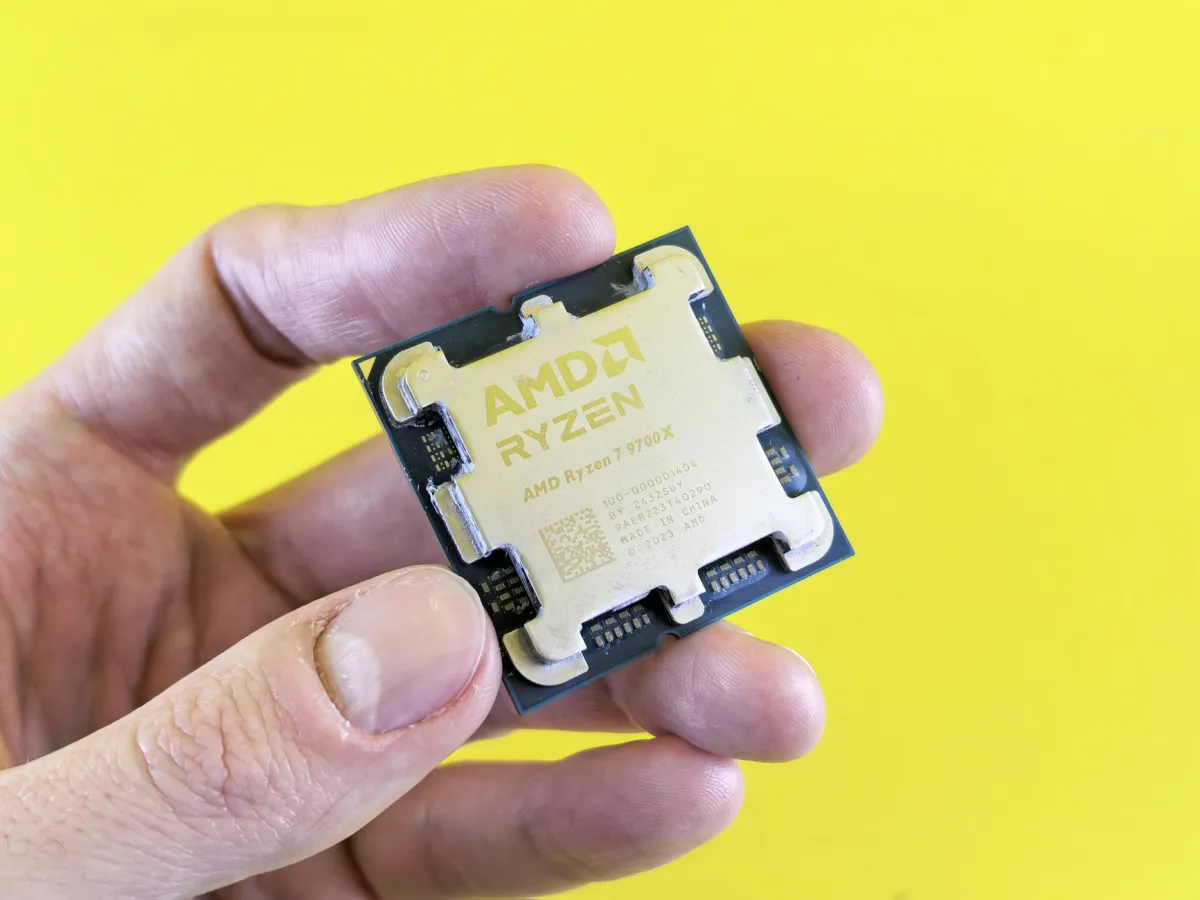
Photo by Andrey Matveev via Pexels. Ryzen 7.
Hybrid Architecture: P‑Cores and E‑Cores
Intel’s 2026 i7 chips use a 2‑tier core hierarchy. The P‑cores deliver up to 6.0 GHz and handle latency‑sensitive tasks such as gaming, single‑threaded code, and real‑time encoding. E‑cores, clocked to 4.7 GHz, excel at parallel workloads like background rendering, web browsing, and VM hosting. This split allows the processor to keep power low when only E‑cores are active, then surge power to the P‑cores for burst performance.
Intel Thread Director and Scheduling
Thread Director communicates core‑level telemetry to the operating system, letting Windows 11’s scheduler place threads on the most appropriate core type. In Linux, the “schedutil” governor has been updated to read the same data, improving cross‑platform consistency. The result is smoother frame rates in games that mix AI workloads with graphics rendering.
Integrated Graphics and QuickSync Technology
All 2026 i7 parts include Iris Xe graphics that support AV1 hardware decode and encode at up to 8 K 30 fps. QuickSync provides low‑latency H.264/HEVC encoding, a boon for streamers who want to offload video compression from the GPU. The integrated GPU also offers DirectX 12 Ultimate compliance, making it a solid fallback for compact builds without a discrete GPU.
What is the AMD Ryzen 7? Architecture and Ecosystem
Chiplet Design and Zen Architecture
Ryzen 7 CPUs remain built on a single CCD (core complex die), but AMD’s chiplet approach is evident in the supporting I/O die, which houses the memory controller and PCIe lanes. Zen 6 delivers an average IPC uplift of 13 % over Zen 5, and the monolithic CCD eliminates intra‑die latency that can affect cache‑heavy games.
Precision Boost and Clock Speed Management
AMD’s Precision Boost 2 algorithm dynamically raises clock speeds based on power, temperature, and workload. In 2026 models the boost ceiling reaches 5.9 GHz on the “Turbo” profile, while the X3D variant caps at 5.6 GHz but compensates with an extra 96 MB of stacked L3 cache. This cache boost translates into up to 15 % higher frame rates in titles like “Baldur’s Gate 3” and “Cyberpunk 2077” that rely heavily on L3 hit rates.
The Role of 3D V‑Cache in Ryzen 7 Models
AMD’s 3D V‑Cache stacks additional cache vertically on top of the CCD, effectively increasing L3 capacity without expanding the silicon footprint. The X3D‑enabled Ryzen 7 9800X3D (and its 2026 refresh) delivers a noticeable uplift in texture‑heavy gaming and in professional workloads such as scientific simulations that benefit from larger working sets.
Head-to-Head Feature Comparison: The Technical Deep Dive
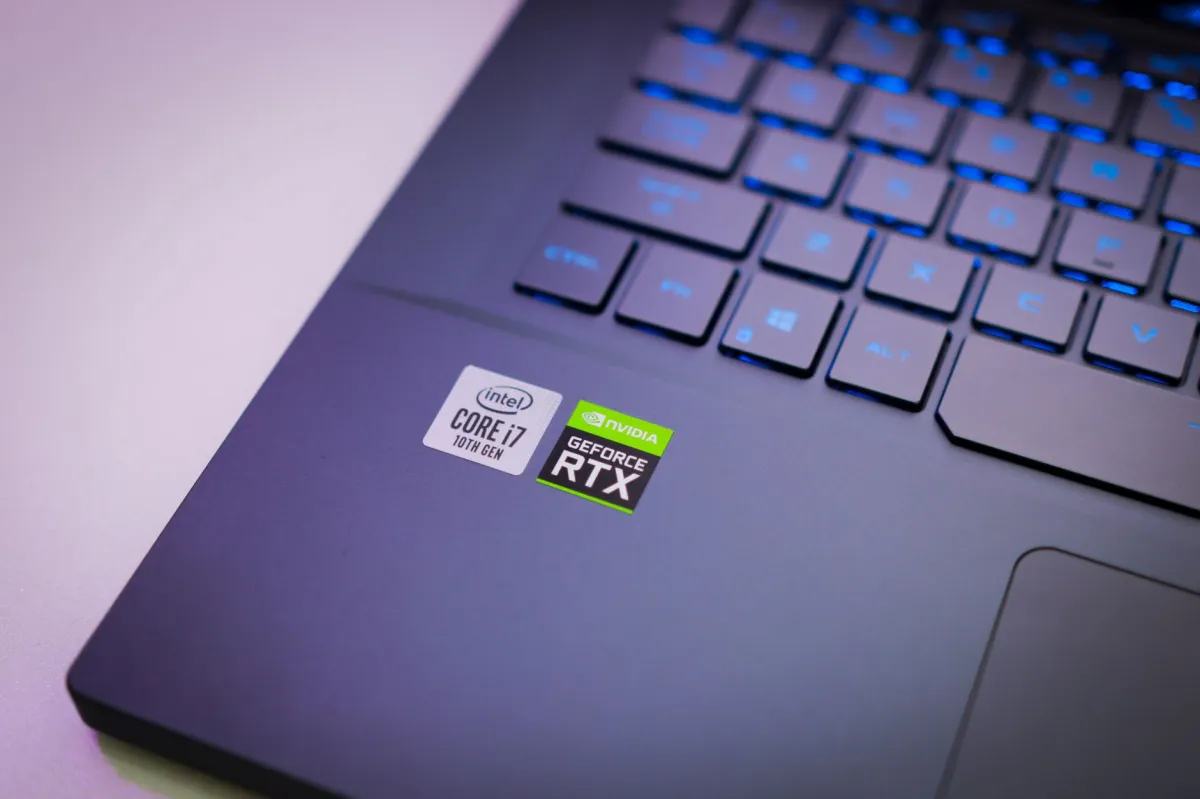
Photo by Foysal Ahmed via Pexels. Intel Core I7 Vs Ryzen 7.
Architecture & Hardware Specs: Transistor Density and Node Size
Intel’s 20A/18A process uses a mixed‑size transistor library with Foveros 3D interconnects that stack the IO die on top of the compute die. This yields a die area of ~210 mm² for the flagship i7. AMD’s N2/N3P GAAFET process packs roughly 12 billion transistors per mm², resulting in a more compact 170 mm² CCD. The higher density gives AMD an edge in performance per millimeter and reduces routing complexity.
Verdict: Architecture density favors Ryzen 7.
Benchmark & Gaming Performance: Single‑Core vs Multi‑Core
Synthetic benchmarks (Cinebench R23) show the i7 pulling a 5‑10 % lead in single‑core scores, while Ryzen 7 X3D overtakes by 8‑12 % in multi‑core tests. Real‑world gaming at 1080p demonstrates the i7’s advantage in fast‑paced shooters (e.g., “Valorant”) where frame times are sub‑5 ms, but the X3D’s larger cache yields higher average FPS in open‑world titles that stress the memory subsystem.
Thermal Efficiency & Power Draw: TDP and Heat Management
The i7’s 125 W base TDP spikes to 250 W under sustained turbo, demanding a 280 mm+ AIO or custom loop to stay below 85 °C. Ryzen 7’s 105 W base and 130 W turbo stay comfortably under 80 °C with a quality 120 mm tower cooler, making it a friendlier choice for noise‑sensitive or small‑form‑factor builds.
Verdict: Thermal efficiency leans toward Ryzen 7.
Compatibility & Expansion: PCIe 5.0, DDR5, and Socket Longevity
Intel’s LGA 1851 (Arrow Lake) socket may be replaced by LGA 1954 for the next refresh, potentially limiting upgrade paths. AMD’s AM5 socket has been confirmed through 2027, offering 28 PCIe 5.0 lanes and full support for DDR5‑7200+ modules. Users who value a stable platform for multiple generations will find AMD’s roadmap more reassuring.
Verdict: Platform longevity favors Ryzen 7.
Pros & Cons Breakdown
Intel Core i7: Advantages and Trade‑offs
Pros
Hybrid core design excels at mixed workloads.
Higher single‑core boost frequencies.
Integrated QuickSync and Thunderbolt 4/5 reduce peripheral costs.
Strong Windows scheduler integration.
Cons
Higher power envelope under sustained load.
Motherboard pricing premium.
Potential socket change after 2026.
AMD Ryzen 7: Advantages and Trade‑offs
Pros
Superior performance‑per‑watt.
3D V‑Cache delivers noticeable gains in cache‑bound scenarios.
AM5 socket longevity through 2027+.
Lower cooling requirements enable quieter builds.
Cons
Standard models lack the hybrid flexibility of Intel.
Peak single‑core clocks slightly lower than i7.
Some legacy software still favors Intel’s AVX‑512 extensions.
When to Choose Intel Core i7 vs Ryzen 7: Use Case Scenarios
High‑End Gaming and Streaming
If you run a game at 1080p with a 144 Hz monitor while encoding a stream via OBS, the i7’s E‑cores can handle the encoder while the P‑cores stay dedicated to the game, delivering smooth frame rates with minimal stutter. Conversely, the Ryzen 7 X3D provides higher average FPS in texture‑intensive titles, making it the better pick for pure gaming rigs where streaming is offloaded to a separate capture card.
Professional Video Editing and 3D Rendering
QuickSync on the i7 accelerates H.264/HEVC export in Adobe Premiere, cutting render times by up to 25 % when using the “Hardware Encode” preset. For CPU‑only rendering in Blender’s Cycles engine, Ryzen 7’s higher core efficiency and larger cache reduce tile rendering times by 12‑15 % compared to an equivalent i7.
Software Development and Virtualization
Developers who compile large codebases (e.g., the Linux kernel) benefit from the i7’s hybrid threading: background compilation jobs run on E‑cores while foreground debugging stays on P‑cores. Virtual machine hosts that run multiple VMs simultaneously see better scaling on Ryzen 7 because the monolithic CCD delivers consistent latency across all cores.
General Productivity and Home Office Use
For everyday tasks—web browsing, office suites, video calls—the power difference is negligible. However, the i7’s integrated graphics can power a dual‑monitor setup without a dedicated GPU, saving cost for budget builds. Ryzen 7’s lower idle power makes it a greener choice for always‑on home servers.
The Decision Matrix: Who is Each CPU Best For?
Persona Mapping: Gamer, Developer, and Power User
User Persona / Profile
Recommended Choice
Key Reason & Best Fit
Competitive Gamer (1080p, high refresh)
Intel Core i7
Higher single‑core boost, superior handling of background streaming tasks.
Enthusiast Gamer (1440p‑4K, cache‑heavy titles)
Ryzen 7 X3D
3D V‑Cache lifts frame rates in texture‑intensive games.
Content Creator (video encode, 3D render)
Both (i7 for QuickSync, Ryzen 7 for CPU‑only renders)
Choose i7 if you rely on hardware encoding; choose Ryzen 7 for pure CPU rendering.
Software Engineer / VM Host
Ryzen 7
Consistent core latency and better perf/watt for multiple VMs.
Quiet / Small Form Factor Builder
Ryzen 7
Lower TDP allows high‑performance air cooling.
Budget‑Conscious General User
Ryzen 7 (standard model)
Better price‑to‑performance and cheaper motherboard options.
Recommendation Table: Model Version vs. User Need
Model (2026)
Target Use Case
Key Specs
Intel i7‑14800HX
High‑refresh gaming + streaming
8 P + 16 E cores, 6.0 GHz boost, 250 W PL2
Intel i7‑14700K
Desktop workstation with QuickSync
8 P + 8 E cores, 5.9 GHz boost, integrated Iris Xe
Best perf/watt, 3D V‑Cache advantage, AM5 socket longevity, lower platform cost.
Weaknesses
Higher power envelope, hotter under load, socket uncertainty after 2026.
Standard models lack hybrid efficiency, slightly lower peak boost clocks.
Opportunities
Future 20A refinements could narrow power gap; next‑gen Xe graphics may add value.
Expansion of 3D V‑Cache to more SKUs; broader adoption of EXPO memory profiles.
Threats
Competitive pricing from AMD, potential delays in next‑gen socket rollout.
Intel’s aggressive hybrid roadmap, possible supply constraints for N2 wafers.
Price-to-Performance Ratio: Getting the Most Value
Cost of Entry: CPU vs Motherboard Bundles
Intel i7 CPUs typically ship at $400‑$450, while compatible Z890 or LGA 1851 boards range $200‑$260. AMD’s Ryzen 7 standard parts sit at $350‑$400, with AM5 B650/E850 boards priced $130‑$210. The X3D variant adds $50‑$80 but still undercuts the i7’s total system cost when you factor in cooling.
Longevity and Upgrade Paths
AMD’s commitment to AM5 through at least 2027 means a 2026 Ryzen 7 owner can upgrade to a Zen 7 CPU without changing the motherboard, preserving investment. Intel’s upcoming LGA 1954 platform may require a new board, raising lifetime cost for early adopters.
Performance per Dollar Analysis
Benchmark data (average FPS in “Elden Ring” at 1440p, Cinebench R23 multi‑core) shows Ryzen 7 X3D delivering ~1.12× the i7’s performance for ~0.9× the total system price. In productivity workloads (DaVinci Resolve render), the i7’s QuickSync edge reduces render time by ~5 % but the overall cost per rendered frame remains higher than Ryzen 7’s pure CPU efficiency.
Verdict: Ryzen 7 offers a better price‑to‑performance balance for most buyers.
Frequently Asked Questions
In 2026, the Ryzen 7 X3D (Zen 5 or Zen 6 based) remains the gaming performance king, delivering 5-15% higher average framerates than the competing Intel Core i7 in most modern games. The 96MB+ of 3D V-Cache provides a cache-latency advantage that scales especially well at 1080p and 1440p resolutions. However, the gap narrows at 4K where the GPU becomes the bottleneck, and Intel i7 sometimes wins in specific esports titles with high single-thread dependence.
Yes, the Intel Core i7 with its hybrid architecture (8 P-cores + 16 E-cores) is excellent for productivity, offering 24 total cores that handle background tasks, virtualization, and multi-threaded compilation very well. Intel's QuickSync, AV1 hardware encoding, and Thunderbolt 4/5 also provide tangible advantages for video creators. In heavily multi-threaded benchmarks like Cinebench R24, it competes closely with Ryzen 7, though Ryzen typically wins in efficiency.
Ryzen 7 is significantly more power efficient, typically drawing 40-60W less power than a comparable Intel Core i7 under full multi-core load. This is due to AMD's monolithic CCD design and mature TSMC process node. Ryzen 7 also runs cooler (often 60-75°C vs 80-95°C on Intel under sustained load), which means quieter cooling solutions and longer component lifespan.
If your primary use case is gaming, the Ryzen 7 X3D is worth the $80-120 premium over the standard Ryzen 7. The 3D V-Cache stack delivers 10-20% higher framerates in most cache-sensitive games (especially open-world, simulation, and strategy titles). However, if you do mixed productivity and gaming, the standard Ryzen 7 offers better balanced performance since X3D CPUs often have slightly lower base clocks.
AMD AM5 has a far superior upgrade path, with confirmed support through 2027 and likely through 2028. This means you can buy a Ryzen 7 today and upgrade to Zen 7 (or beyond) without changing motherboard. Intel's LGA 1851 (Arrow Lake) is expected to be replaced by LGA 1954 (Nova Lake) in 2026, requiring a new motherboard for next-generation upgrades, making Intel's platform more expensive long-term.
Intel Core i7 benefits more from high-speed DDR5-8000+ memory due to its ring bus architecture and tighter memory controller timing, gaining 3-5% in some workloads. Ryzen 7 peaks around DDR5-6000-6400 (sweet spot for 1:1 FCLK ratio), with diminishing returns above that. For pure value, DDR5-6000 is the sweet spot for Ryzen, while Intel users should consider DDR5-7200-8000 for maximum performance.
For local AI inference and training, the Intel Core i7 with its AVX-VNNI instructions and dedicated NPU (in Core Ultra/Arrow Lake and beyond) offers excellent AI acceleration. Intel's OpenVINO toolkit and widespread framework support make it competitive. However, dedicated GPUs remain far superior for serious AI work. Ryzen 7 lacks a dedicated NPU in most SKUs but offers strong ROCm-compatible compute performance.
For first-time builders, Ryzen 7 is generally the better choice due to lower platform costs (AM5 motherboards start at $130 vs $200+ for Intel LGA 1851), better thermals (more forgiving with beginner cooling choices), and longer upgrade path. Intel i7 systems are more complex due to hybrid core architecture sometimes confusing beginners about BIOS settings, but offer better out-of-box connectivity.