

Understanding how meteor showers form is the first step to truly appreciating the night sky. In 2026, global radar networks have mapped debris streams with unprecedented precision, giving both amateurs and professionals a clearer picture of the celestial choreography that produces those fleeting streaks.
How Meteor Showers Form – What Are Meteor Showers? The Short Version
Definition of a Meteor Shower
Definition: A meteor shower is a phenomenon where numerous meteors appear to radiate from a single point in the sky, caused by Earth passing through a stream of comet or asteroid debris.
Common Misconceptions About Shooting Stars
- People often think each streak is a separate “star” falling, but the bright line is actually super‑heated air (plasma) glowing around a tiny rock.
- The radiant is not a star; it’s a perspective vanishing point, much like railroad tracks meeting at the horizon.
- All meteors in a shower come from the same debris stream, not from random space junk.
The Role of Earth’s Orbit
Earth travels around the Sun at roughly 30 km s⁻¹. Once a year, the planet’s path intersects a narrow ribbon of dust left behind a comet—or, in rarer cases, an asteroid. That intersection point—called the node—creates the predictable peak dates we see on calendars.
2026 Sky Watching – Why Meteor Showers Matter Now
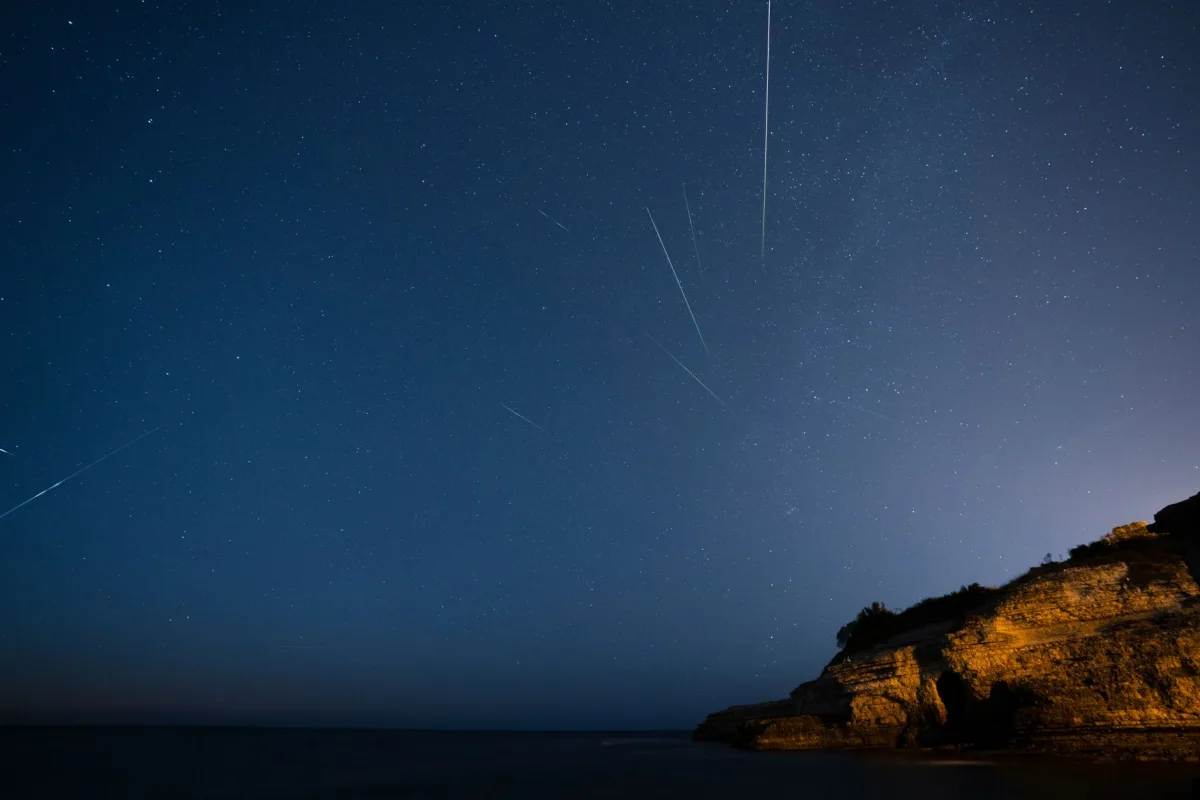
Current Trends in Amateur Astronomy
2026 has seen a surge in “night‑time wellness” apps that blend mindfulness with stargazing. Platforms like Star Walk now push notifications for peak shower windows, and community‑driven counting apps let observers contribute data to NASA’s Meteor Shower website.
Impact of Solar Activity on Visibility
Solar Cycle 25 is approaching its maximum around 2025‑2026, raising the density of the upper atmosphere. A denser thermosphere slows meteoroids slightly, which can lengthen the visible trail but also increase early ablation, making the faintest meteors harder to spot.
A Personal Note
When I was ten, I camped in the Atacama Desert and watched a Perseid fireball arc across the sky, bright enough to momentarily illuminate the sand. That night taught me that a meteor shower is not just a spectacle; it’s a reminder that Earth constantly sweeps through the remnants of ancient travelers.
What You Need to Observe Meteor Showers
Essential Equipment
Binoculars
7×50 or 10×42 models give a wider field than a telescope while still offering enough magnification to spot faint trails.
Mobile Apps
Star Walk, SkySafari, and the UK Space Agency’s “Meteor Tracker” provide real‑time radiant altitude, moon‑phase alerts, and a simple way to log sightings.
Comfort Gear
A reclining camping chair or sun lounger, warm blankets, and a thermos of hot tea keep you still long enough for your eyes to adapt.
Ideal Viewing Locations in 2026
Colombia’s equatorial position grants a near‑vertical view of many radiants. The Tatacoa Desert, a short flight from Bogotá to Neiva followed by a one‑hour drive, offers virtually no light pollution and a dedicated observatory where visitors can enjoy a clear horizon without special equipment.
Safety Tips for Nighttime Observation
Check the Weather
Thin clouds can wipe out faint meteors, so consult a reliable forecast before heading out.
Avoid Bright Moonlight
If the Moon is above the horizon, its glare reduces contrast dramatically. Aim for nights when the Moon is below the horizon or in a thin crescent phase.
Preserve Night Vision
Carry a flashlight with a red filter; red light preserves your dark‑adapted eyes.
Dress for the Cold
Desert highlands can drop below freezing after midnight. Layer clothing, wear insulated boots, and keep a spare set of dry socks.
How Meteor Showers Form – The Science Behind Meteor Shower Formation
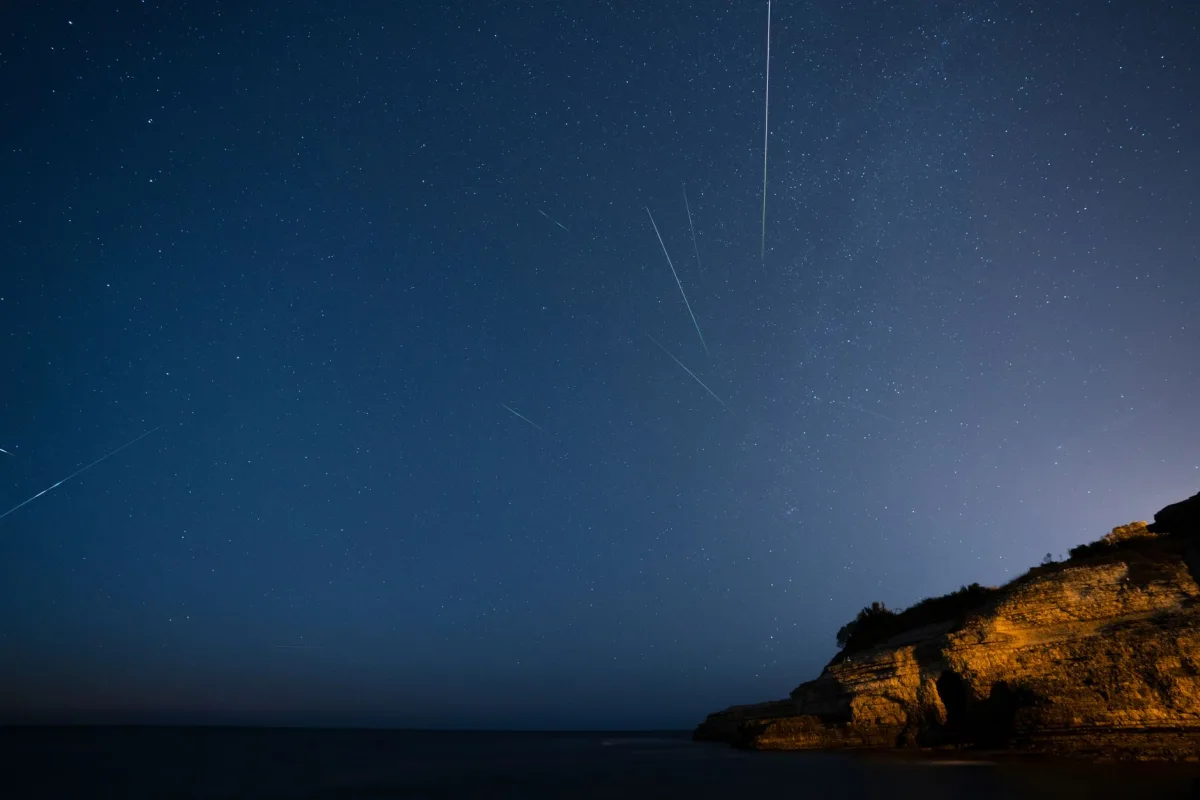
Comet Debris Streams
When a comet nears perihelion, solar heating sublimates volatile ices. Gas jets drag dust particles away, forming the characteristic white dust tail. Over thousands of revolutions, the dust settles into a ribbon that follows the comet’s orbit. The Perseids, for example, originate from Comet Swift‑Tuttle’s broad dust stream, estimated to be several thousand kilometres wide.
Asteroid‑Origin Showers
The Geminids are the flagship case of an asteroid‑origin shower. Near‑Earth Object 3200 Phaethon, though classified as an asteroid, exhibits comet‑like activity when it skims the Sun at 0.14 AU, shedding rock‑rich particles that produce bright, slow‑moving meteors.
Radiant Perspective Explained
All meteoroids in a stream travel on nearly parallel trajectories. As they enter the atmosphere, the brain projects those parallel lines back to a single point—the radiant. This optical illusion is why we name showers after the constellation that houses the radiant (e.g., Perseids from Perseus).
Atmospheric Plasma Glow
Entry speeds range from 11 km s⁻¹ (slow, Earth‑co‑orbital debris) to 72 km s⁻¹ (retrograde cometary particles). The rapid compression of air in front of the meteoroid creates a shock wave that heats the surrounding gas to roughly 8,000–10,000 K, ionizing it and producing a luminous plasma column.
Top 2026 Meteor Showers to Watch
Perseids & Swift‑Tuttle Debris
The Perseids peak on the night of 12–13 August, with a predicted ZHR of about 80 meteors per hour. The radiant climbs high in the northeastern sky after midnight, and the Moon sets just before the peak, giving a dark backdrop.
Geminids & 3200 Phaethon
December’s Geminids are the most reliable shower, offering up to 120 ZHR under ideal conditions. Because the parent body is rocky, some meteoroids survive deeper into the atmosphere, occasionally dropping meteorites.
Other Notable Streams
- Alpha Capricornids: Produce dramatic fireballs, but a near‑full Moon on 29 July (about 93 % illumination) reduces faint counts.
- Leonids: A retrograde shower from Comet Tempel‑Tuttle, reaching 71 km s⁻¹, creates blue‑white streaks that can outshine the background.
How Observation Conditions Affect Visibility
Zenith Hourly Rate vs. Reality
ZHR assumes a dark sky, radiant at the zenith, and an unobstructed field of view. Real‑world conditions—light pollution, radiant altitude, and atmospheric transparency—typically reduce observable rates to 20‑50 % of the ZHR.
Light Pollution & Moon Phase
Even a thin crescent can cut visible meteors by half in urban areas. Planning observations just before the full Moon on 29 July is a mistake; instead, aim for nights when the Moon is below the horizon, as recommended for the Perseids.
Geographic & Timing Factors
Observing from the “morning side” of Earth—after local midnight—places you on the leading edge of the planet’s orbital motion, increasing the encounter rate. Locations near the equator, like the Tatacoa Desert, receive the radiant higher in the sky, improving count rates.
Benefits and Limitations of Meteor Shower Viewing
Educational Value
Watching a shower provides a live demonstration of orbital mechanics, atmospheric physics, and the solar system’s debris cycle. Teachers can tie the event to curriculum standards in physics and Earth science.
Predictability vs. Uncertainty
While peak dates are fixed, actual meteor counts fluctuate due to filament crossings, planetary perturbations, and weather. Expect a range rather than a single number.
Safety Considerations
Nighttime fieldwork carries risks: uneven terrain, cold temperatures, and wildlife. Proper clothing, a reliable flashlight, and a partner are essential.
Avoid These Viewing Pitfalls
Misreading Radiants
Staring directly at the radiant yields short, faint trails. The sweet spot lies 30‑50° away, where meteors trace longer paths across the sky.
Overestimating ZHR
Remember the ZHR is a theoretical ceiling. In a city with moderate light pollution, you might see only 10‑15 meteors per hour even when the forecast lists 80 ZHR.
Ignoring Atmospheric Conditions
Thin haze or high humidity scatters starlight, reducing contrast. Use a local weather app to check for clear, dry nights.
Common Mistakes New Observers Make
Skipping Dark‑Adaptation
It takes 20‑30 minutes for eyes to reach maximum sensitivity. Avoid looking at bright screens or phone lights during that period.
Choosing the Wrong Time of Night
The best window is usually one to two hours after the radiant reaches its highest point. Early evening often shows only the brightest fireballs.
Neglecting Data Logging
Even a simple notebook entry—date, time, radiant altitude, and count—adds value to citizen‑science projects. Many platforms automatically aggregate these reports for professional analysis.
Who Is This Best For?
| Target Persona | Recommended Option | Key Reason & Real‑World Benefit |
|---|---|---|
| Casual Stargazer | Tatacoa Desert night‑out | Zero light pollution, easy access to radiant, comfortable reclining chair for long sessions. |
| Professional Astronomer | High‑resolution video camera (e.g., NASA‑approved MeteorCam) | Captures faint meteors for orbital reconstruction and ZHR calibration. |
| Educator & Student | Mobile app + binoculars | Instant radiant tracking, data logging for classroom projects, low cost. |
Reader Questions
Do meteor showers really come from constellations?
No. The constellation merely marks the direction of the radiant; the meteoroids travel on parallel paths that intersect Earth’s orbit.
What causes the bright streaks?
Super‑heated plasma formed by atmospheric drag around the meteoroid. The rock itself often vaporizes completely.
Can I predict exact times?
Peak activity can be narrowed to a 2‑hour window, but individual meteors appear randomly. Statistical models give rates, not precise timestamps.
Why is the radiant not a real star?
It’s a vanishing point created by perspective, not a luminous object.
How does the ZHR differ from actual counts?
ZHR assumes optimal conditions—dark sky, radiant at zenith, unlimited field of view. Real counts are typically 20‑50 % of that number.
Wrap‑Up and Key Takeaways
Understanding how meteor showers form unlocks a deeper appreciation for the night sky and equips you with realistic expectations for each viewing session. Earth’s yearly sweep through cometary and asteroidal debris creates predictable peaks, but local conditions—light pollution, moon phase, and atmospheric clarity—determine what you actually see. Choose a dark site, let your eyes adapt, and look away from the radiant for the longest trails. With the right preparation, the 2026 sky offers some of the most spectacular displays of the decade.