
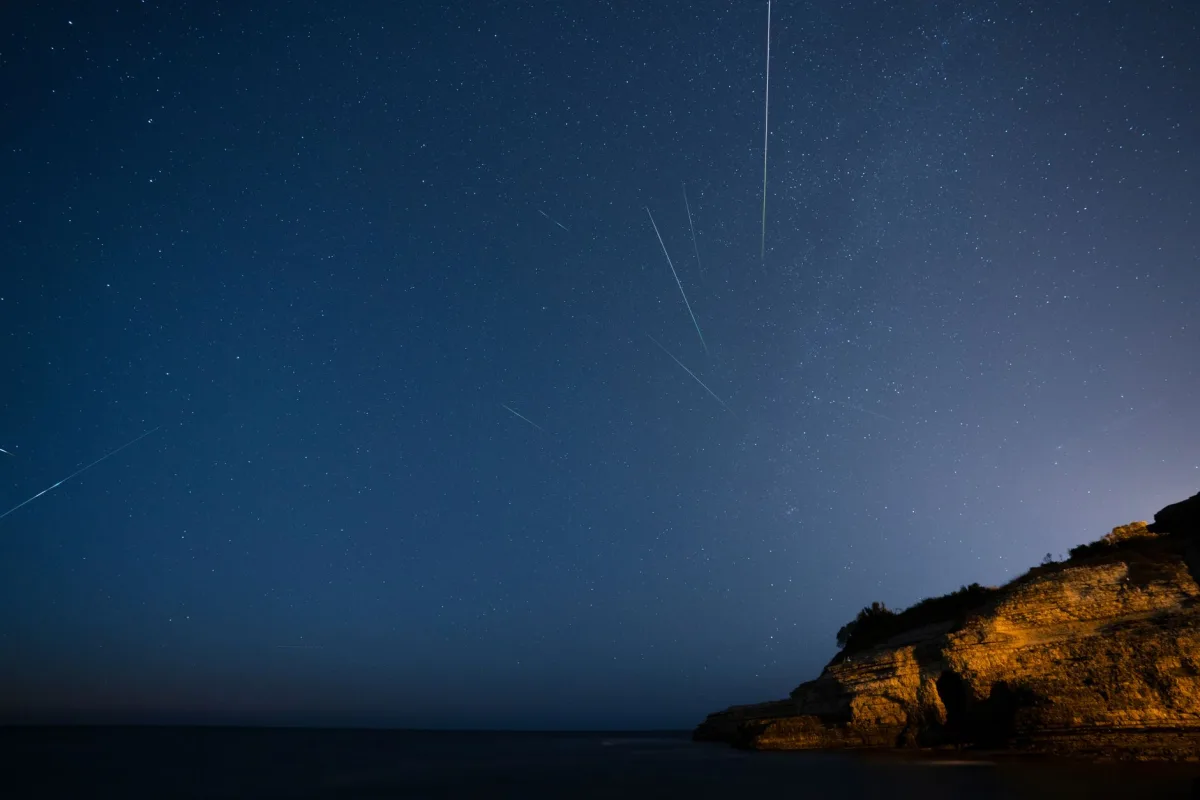
On the night of August 12 2025, a family camping in the high desert of New Mexico watched a Perseid fireball arc so low it brushed the treetops, leaving a glowing trail that lingered for almost a minute. The children shouted, “It’s a dragon!” while the parents fumbled for their phones, barely catching the brief flare. That same dramatic moment can happen again this year—if you know when, where, and how to look.

Definition: The Perseids meteor shower is an annual display caused by Earth passing through debris left by comet 109P/Swift‑Tuttle. Each tiny particle vaporizes in the upper atmosphere, creating a brief but brilliant “shooting star.”
What Are the Perseids Meteor Shower? Definition and Origins
What the Perseids Are
The shower peaks each August when our planet slices through a dense stream of cometary dust. Meteoroids travel at roughly 37 mi s⁻¹ (≈133 000 mph) and ignite between 50 km and 120 km altitude. Under dark skies, observers can see anywhere from a few meteors per hour to a spectacular 100‑150 meteors per hour.
Historical Highlights
- First recorded Chinese observation in 36 AD.
- Named after the constellation Perseus, the radiant point, by medieval European astronomers.
- Giovanni Virginio Schiaparelli linked the shower to comet Swift‑Tuttle in 1866.
- Modern video networks (NASA, Space.com, EarthSky.org) track thousands of Perseids per year, refining rate estimates.
Why the Perseids Matter in 2026
2026 Observation Opportunities
The pre‑dawn peak falls on the nights of August 12‑13, when the moon is a thin waxing crescent (≈15 % illumination) and sets before local sunrise. Long‑range forecasts from the National Weather Service and BBC Weather suggest clear skies across much of the western United States, while GreenvilleOnline notes a warm, low‑humidity night in upstate South Carolina—ideal for comfortable, extended viewing. [1] Remember that reliable forecasts extend only about seven days; check again 48 hours before the event.
Why Astronomers and Stargazers Care
- Peak ZHR (Zenithal Hourly Rate) can reach 100‑150 meteors per hour under ideal conditions.
- A high percentage of bright fireballs offers excellent opportunities for photography and scientific reporting.
- The dust stream contains material ejected over the last two millennia, giving researchers a time capsule of cometary composition.
- Swift‑Tuttle’s massive 16‑mile nucleus supplies the fragments that light up our sky, highlighting the cosmic significance of each streak.
Science Behind the Perseids
Swift‑Tuttle: The Parent Comet
Discovered in 1862 by Lewis Swift and Horace Tuttle, 109P/Swift‑Tuttle follows a 133‑year orbit. Its last perihelion was in 1992; the next will be in 2126. Each pass releases dust and ice that spreads along the orbital path, forming a broad, multi‑century debris stream.
Dust Stream Age and Distribution
Particles range from sub‑micron grains to pebble‑sized fragments. Older debris, dating back to the first century AD, has diffused into a wide torus, while newer material creates a denser core that produces the brightest meteors during the early peak.
Meteor Trail Dynamics
When a meteoroid enters the atmosphere, ablation creates a glowing plasma column. Larger particles generate fireballs with persistent trains that can linger for minutes. The radiant lies in Perseus, but the longest visual streaks appear when you look 50‑70° away from it, toward the south‑southwest.
Peak Timing and Viewing Window for the Perseids
Official Peak Dates in 2026
| Date (UTC) | Local Peak (US & Canada) | Notes |
|---|---|---|
| 2026‑08‑11 03:00‑04:30 | Aug 11, 22:00‑23:30 PDT | Early peak; moon below horizon. |
| 2026‑08‑12 02:45‑04:15 | Aug 12, 21:45‑23:15 PDT | Highest ZHR; clear‑forecast region. |
| 2026‑08‑13 02:30‑04:00 | Aug 13, 21:30‑23:00 PDT | Late peak; moon sets 00:10 local. |
Optimal Viewing Hours
From roughly midnight to an hour before sunrise, the radiant climbs higher and Earth rotates into the densest part of the stream. Observers report that meteor counts can double between 02:00 and 04:00 local time.
Impact of Moon Phase
In 2026 the moon is new on August 11, then a thin waxing crescent on August 12‑13. Because the moon sets before 02:00 local time, the sky stays dark enough to reveal faint meteors down to magnitude +5. A bright moon would cut counts by up to 70 %.
Best Places to Watch the Perseids in 2026
North American Hotspots
- San Diego County, California – Dark‑sky sites near the coast and inland valleys offer Bortle Class 4 or better. San Diego State University’s astronomy club hosts a free viewing night at the campus observatory on August 12.
- Mount Laguna Observatory (San Diego County) – Elevation 6,059 ft, minimal light pollution, and an on‑site meteor‑count station run by SDSU.
- Great Smoky Mountains National Park – Designated International Dark Sky Park with an excellent northern horizon.
- Bryce Canyon, Utah – High altitude and clear desert air make for spectacular fireball sightings.
International Viewing Spots
- Lake Tekapo, New Zealand – Dark skies, minimal humidity, and a well‑known astronomy community.
- La Palma, Canary Islands – Low light pollution and excellent atmospheric stability for Northern‑Hemisphere observers.
Local Observatories
Both San Diego State University and Mount Laguna Observatory provide public outreach events, real‑time meteor counts, and guidance on dark‑adaptation techniques. Their websites (sdsu.edu) list exact coordinates, parking info, and up‑to‑date weather links for the August nights.
Viewing Tips for the Perseids
Look Away from the Radiant for Longer Streaks
Meteors that emerge near the radiant appear short because you see them head‑on. Aim 50‑70° away from Perseus toward the south‑southwest; the trails will stretch across a larger portion of the sky, making them easier to spot and photograph.
Use a Wide Field of View
Lie on a reclining chair, sleeping bag, or yoga mat. Keep your head still and your eyes scanning a broad swath of sky. A 180° view maximizes your chance of catching a meteor.
Timing Your Observations
- Arrive 30 minutes before your planned start to let eyes adapt.
- Stay for at least 90 minutes; meteor bursts can be sporadic.
- Use a red‑light flashlight or a phone app with a red filter to protect dark adaptation.
Why Telescopes Won’t Help You See More Perseids
Field‑of‑View Limitations
Telescopes typically offer a few arcminutes of sky—far too narrow for meteors that can appear anywhere. Binoculars improve brightness but still restrict the view to a few degrees.
Light‑Pollution and Narrow Focus
Even a modest telescope gathers ambient light, which can wash out faint meteors. In dark‑sky sites the naked eye outperforms any optics for meteor hunting.
All‑Sky Cameras vs. the Naked Eye
All‑sky cameras equipped with fisheye lenses capture roughly twice as many meteors as a naked‑eye observer under identical conditions. This is why professional networks report higher counts than casual visual observers.
Pitfalls When Observing the Perseids
Moonlight Interference
If the moon rises early, use a portable “light shield” (a dark blanket or tarp) to block its glare. Check moonrise times on the BBC Weather site.
Crowded Observation Sites
Popular parks can become noisy and light‑polluted. Arrive early or choose a secondary spot a few miles away.
Weather Woes
Summer clouds can roll in quickly. Monitor the National Weather Service radar 48 hours ahead and have a backup location ready.
Preparation Checklist for the Perseids
Pre‑Observation Planning
- Check a light‑pollution map (lightpollutionmap.info) for the nearest Bortle Class 4+ site.
- Confirm moonset and short‑range weather forecasts for August 11‑13. [2]
- Set a reminder to start dark adaptation 20‑30 minutes before you look up.
Gear Essentials
- Comfortable reclining chair or sleeping bag.
- Red‑light flashlight or phone with red filter.
- Warm layers—temperatures can drop to 50 °F in mountain locations.
- Insect repellent (DEET‑free to avoid damage to optics).
- Notebook or smartphone app to log meteor counts and fireball sightings.
- Portable power bank for phones and cameras.
- Thermal blanket for extra warmth.
- Snacks and water to stay hydrated.
- Star chart or mobile app for locating the radiant.
Safety and Comfort
Bring water, a snack, and a buddy if you’re heading to a remote dark‑sky reserve. Let someone know your expected return time.
Who Should Watch the Perseids? Persona Guide
| Target Persona | Recommended Option | Key Reason & Real‑World Benefit |
|---|---|---|
| Beginner Stargazers | Local park within 30 min drive | Easy access, minimal equipment, still see 15‑30 meteors/hr. |
| Intermediate Enthusiasts | County‑level dark‑sky site (e.g., Mount Laguna) | Better Bortle rating, chance to meet fellow observers. |
| Advanced Amateur Astronomers | Mount Laguna Observatory | Dark‑sky Bortle 3, on‑site meteor count data, networking. |
| Astrophotographers | High‑altitude desert location (e.g., Bryce Canyon) | Clear air, low humidity, long exposure windows. |
| Families with Kids | Backyard with blanket & red‑light flashlight | Comfortable, safe, teaches dark‑adaptation basics. |
Astrophotography Settings for the Perseids
Capturing a meteor requires a balance between sensitivity and field of view. Below is a proven starting point for most DSLR or mirrorless cameras:
- Lens: 24‑35 mm (full‑frame) or 16‑24 mm (APS‑C) – wide enough to cover a large sky segment.
- Aperture: f/2.8‑f/4 – maximizes light intake without excessive softness.
- ISO: 1600‑3200 – high enough for faint meteors but low enough to keep noise manageable.
- Exposure Time: 10‑15 seconds per frame – long enough to record a streak, short enough to avoid star trails.
- Focus: Set to infinity, then fine‑tune using live view on a bright star.
- Intervalometer: Continuous shooting for at least 2 hours, saving each frame as a separate JPEG/RAW file.
After the night, stack the images in software such as DeepSkyStacker or Adobe Lightroom to highlight the brightest fireballs while preserving the star field.
Live Streams for the Perseids
If clouds roll in over your site, don’t miss the show. Several organizations stream the Perseids in real time:
- NASA’s Meteor Watch – live feed from all‑sky cameras across the U.S.
- Slooh – interactive telescope sessions with chat commentary.
Most streams include a live meteor‑count overlay, so you can still track activity even from indoors.