
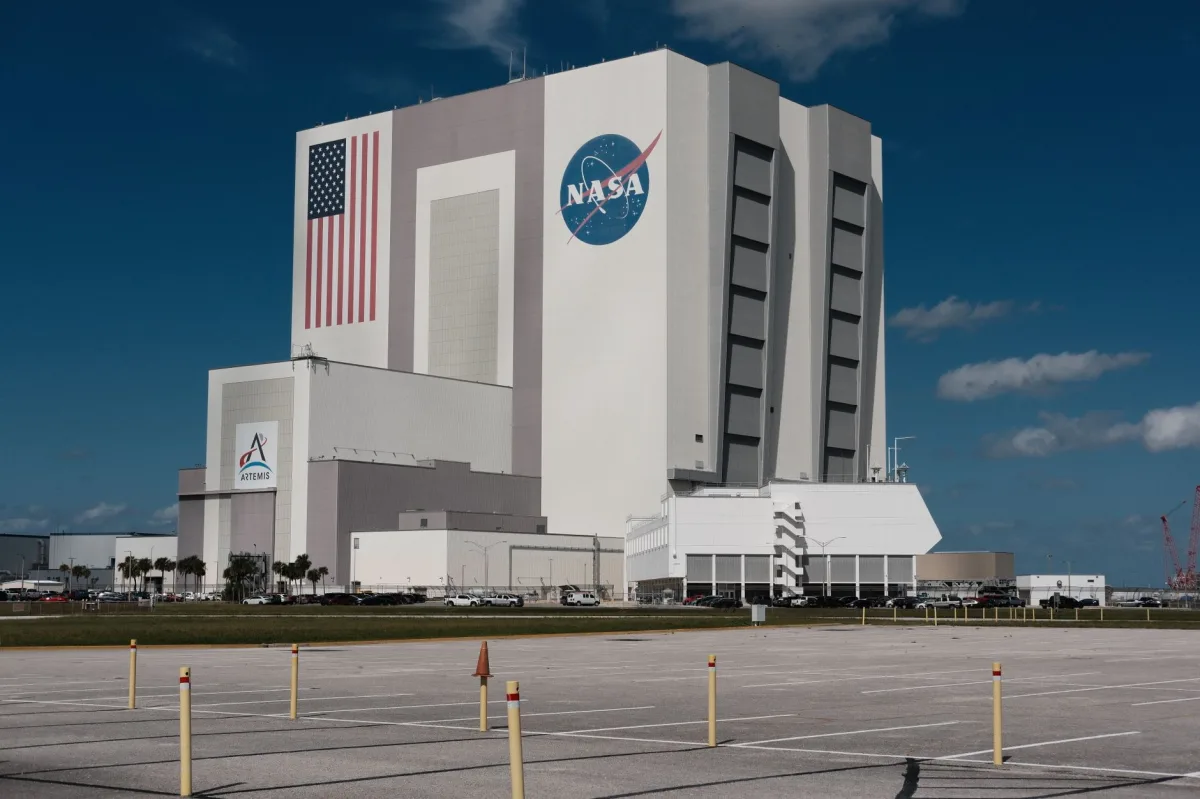
NASA Psyche Mission Explained gives a concise view of why a metal‑rich asteroid is worth a billion‑dollar spacecraft. Launched in October 2023, the probe will spend six years traveling to asteroid 16 Psyche, a body that may be the exposed iron‑nickel core of a planet that never fully formed. The mission’s goal is to map the interior, surface composition, and magnetic environment so scientists can test long‑standing theories of planetary differentiation.
NASA Psyche Mission Explained: Overview and Goals
Mission Goals
The primary objective is to decide whether 16 Psyche is a metallic core, a collisional fragment, or a primitive planetesimal that never differentiated. Secondary goals include measuring the asteroid’s density, mapping its magnetic field, and characterizing surface geology down to decimeter scales. Together, these data will illuminate the processes that built terrestrial planets and the early dynamical history of the main belt.
Target Asteroid
Asteroid 16 Psyche orbits the Sun between Mars and Jupiter at a semi‑major axis of about 2.9 AU. Radar observations and ALMA measurements give it a mean diameter near 226 km and a bulk density of roughly 3.5 g cm⁻³, indicating a high metal content. Its surface area is about 160,000 km², comparable to the U.S. state of Virginia.
Mission Timeline
| Milestone | Date (2023‑2029) |
|---|---|
| Launch (Falcon Heavy, LC‑39A) | 13 Oct 2023 |
| Solar‑array deployment & commissioning | Oct 2023 |
| First deep‑space calibration (Earth, Moon, Jupiter) | Late 2023‑2024 |
| Mars gravity assist | May 2026 |
| Arrival at 16 Psyche | July 2029 |
| Orbital science phase (21 months) | Late 2029‑Mar 2031 |
Why Psyche Matters in 2026
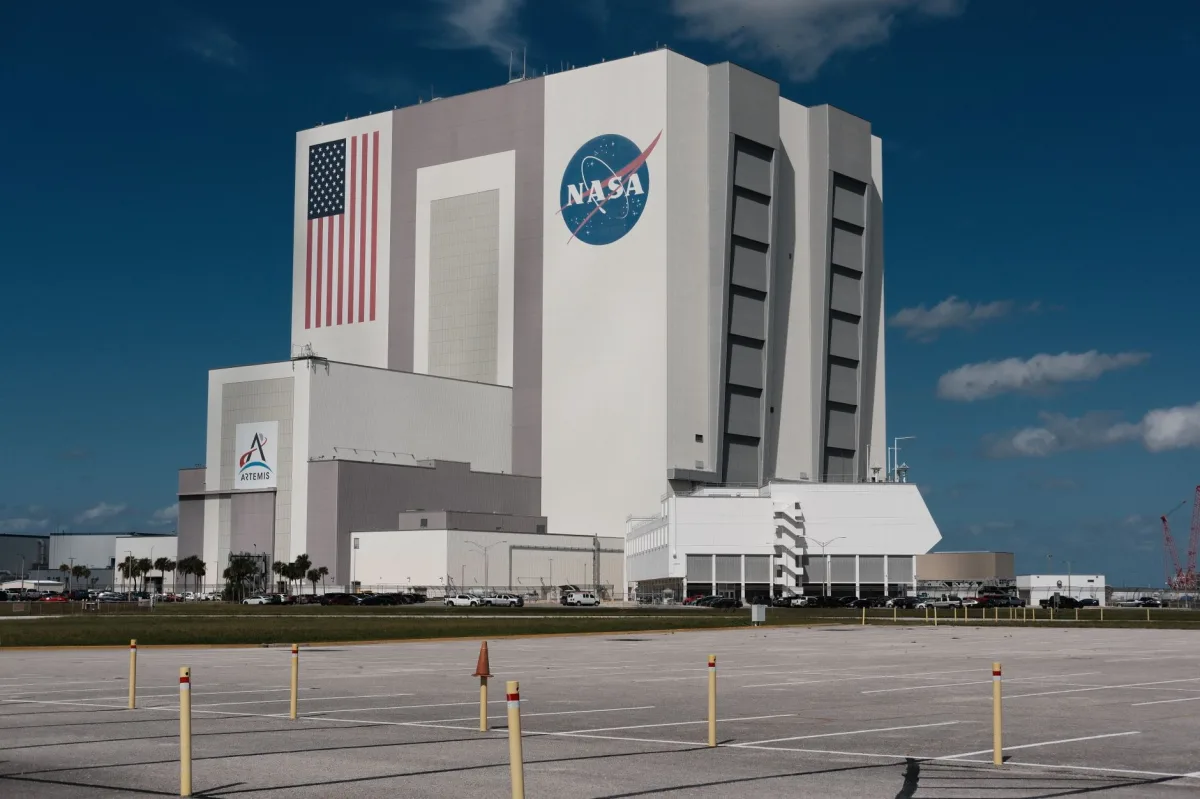
Solar System Formation Insights
Studying a metallic world that may have been stripped of its mantle lets researchers peer directly at material that normally resides thousands of kilometres beneath a planet’s surface. The data will test models of core segregation, impact stripping, and the timing of differentiation in the first few million years after the Sun ignited.
Planetary Core Comparisons
Earth’s core is inaccessible except through indirect seismology and magnetic studies. Psyche offers a natural laboratory where composition can be measured directly via gamma‑ray spectroscopy, providing a benchmark for core‑formation theories across the inner solar system.
Technological Relevance in Modern Spaceflight
The spacecraft reuses the solar‑electric propulsion heritage of NASA’s Dawn mission, proving that ion thrusters can power long‑duration, high‑Δv journeys without sacrificing payload mass. The inclusion of a Deep Space Optical Communications (DSOC) demonstration, built by NASA’s Jet Propulsion Laboratory, pushes the envelope for future high‑bandwidth missions to the outer planets.
Spacecraft: Design and Propulsion
Solar‑Electric Propulsion Heritage
Two Hall‑effect thrusters, each fed by xenon propellant, convert solar‑generated electricity into continuous low‑thrust acceleration. Over the cruise phase, the ion engines will fire for roughly 13,000 hours, delivering the Δv needed for the Mars flyby and the final approach to Psyche.
Cold Gas Thrusters and the 2022 Launch Delay
Cold‑gas thrusters, which expel stored inert gas for fine attitude control, were identified as a thermal risk during a trajectory‑update test in early 2022. A software fix and additional thermal‑vacuum testing added roughly one year to the schedule, moving the launch from an August window to October 2023.
Solar Arrays, Low‑Gain Antenna, and Power Management
Four deployable solar panels generate up to 2.7 kW at 1 AU, enough to run the ion engines and charge the onboard battery. After separation from Falcon Heavy’s second stage, the spacecraft rotated to point its low‑gain antenna toward Earth, establishing a two‑hour lock‑in communications window before switching to the high‑gain dish for nominal operations.
Instruments and Science Payload

Multispectral Imager (MI)
The MI captures images in visible and near‑infrared bands, enabling mineral identification and topographic mapping down to 0.5 m per pixel at low orbit. Calibration uses Earth and lunar scenes taken shortly after launch to correct for stray light and sensor bias.
Gamma‑Ray and Neutron Spectrometer (GRNS)
GRNS measures elemental abundances by detecting gamma rays and neutrons emitted from the surface after cosmic‑ray interactions. It distinguishes iron‑nickel from silicate materials, directly addressing the core‑remnant hypothesis.
Magnetometers
A pair of tri‑axial fluxgate magnetometers, mounted on a 3‑meter boom, records any intrinsic magnetic field. Detecting a remnant field would imply a past dynamo, offering a rare glimpse of an extinct planetary magnetic history.
Gravity Science (X‑band/Ka‑band)
The gravity‑science experiment uses the spacecraft’s X‑band and Ka‑band radio links to track tiny Doppler shifts as Psyche’s gravity perturbs the signal. By mapping these shifts, scientists infer the asteroid’s mass distribution and internal density variations.
Definition: Solar‑electric propulsion system – A propulsion system that uses electricity generated by solar panels to ionize and accelerate propellant, providing efficient thrust over long missions.
Journey to Psyche: Trajectory and Timeline
Launch Window and Falcon Heavy Details
The mission rode SpaceX’s Falcon Heavy from Launch Complex 39A, the first NASA science mission to use that heavy‑lift vehicle. Falcon Heavy achieved Category Three certification, the highest tier for NASA’s most demanding science flights.
Cruise Phase and Gravity Assists
After a three‑year cruise, the spacecraft performed a Mars gravity assist in May 2026. The maneuver added roughly 1 000 mph to the spacecraft’s velocity, reduced propellant consumption, and provided a unique opportunity to image the Red Planet from a crescent perspective.
Arrival and Approach Strategy
Upon reaching Psyche in July 2029, the probe will enter a highly elliptical orbit, gradually lowering its periapsis over 21 months. Each orbit tier enables a different instrument set to operate at optimal resolution and signal‑to‑noise ratios.
Why Some Headlines Got It Wrong
Composition vs. Market Value
Media headlines have inflated Psyche’s worth by treating its iron‑nickel content like a commodity. Even at today’s metal prices, the asteroid’s total metal mass would be worth only a few trillion dollars—a figure dwarfed by the mission’s $1.2 billion cost.
Practical Extraction Feasibility
Extracting ore from a micro‑gravity environment poses severe engineering challenges: anchoring, milling, and transporting material would require infrastructure far beyond current capabilities. The mission therefore focuses on scientific, not commercial, returns.
Scientific vs. Monetary Worth
The real value lies in the unique data set. Understanding a planetary core in situ informs models that affect everything from Earth’s magnetic‑field history to exoplanet interior predictions.
Pros, Cons, and Best Practices
Advantages of Solar‑Electric Propulsion
- High specific impulse reduces propellant mass.
- Enables flexible trajectory design, such as the Mars assist.
- Heritage from Dawn reduces development risk.
Risks and Mitigation Strategies
- Cold‑gas thruster overheating – fixed with software throttling and additional thermal testing.
- Solar‑array degradation – mitigated by redundant panel strings and on‑orbit health checks.
- Communication blackout periods – mitigated by pre‑loaded autonomous fault‑protection scripts.
Operational Best Practices for Long‑Duration Missions
NASA emphasizes independent verification and validation (IV&V) for all flight software, regular health‑checks during cruise, and a “fail‑soft” approach where the spacecraft can revert to safe mode without ground intervention.
Launch‑Slip Lessons
Launch Delays and Scheduling Errors
Initial launch windows were missed because a thermal risk in the cold‑gas thrusters was discovered late in the integration phase. The team now incorporates a broader probabilistic model for weather and hardware readiness, reducing schedule risk for future missions.
Software Configuration Issues in Propellant Lines
The 2022 cold‑gas thruster issue stemmed from a configuration file that set valve duty cycles too high for the revised trajectory. A patch introduced dynamic throttling based on real‑time temperature sensors, preventing overheating on subsequent burns.
Cold‑Gas Thruster Management During Flyby
During the Mars flyby, thrusters were cycled in short bursts to maintain attitude without overheating. Continuous monitoring of thrust‑duration ratios has become a standard operating procedure for all ion‑propulsion missions.
Who Should Care? (Personas & Recommendations)
| Target Persona | Recommended Option | Key Reason & Real‑World Benefit |
|---|---|---|
| Planetary Scientist | Full‑mission data archive | Provides high‑resolution composition and magnetic field data to test core formation models. |
| Astrobiologist | Surface geology reports | Helps assess habitability potential of metallic bodies and informs exoplanet interior studies. |
| Space Enthusiast | Public‑release imagery and DSOC demos | Delivers stunning visuals and showcases next‑gen communications technology. |
| Investor / Policy Maker | Mission cost‑benefit analysis | Illustrates how a $1.2 billion investment yields scientific returns that shape future exploration budgets. |